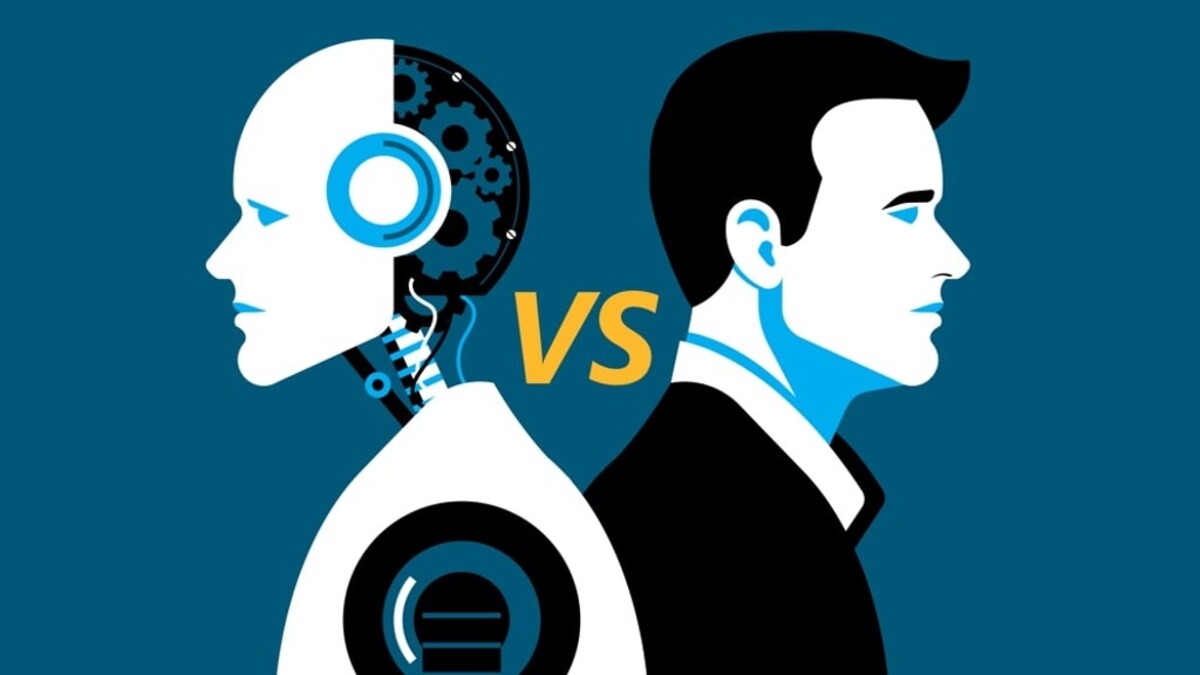
This blog explores the evolving debate over AI-generated vs. human-generated content in 2026, revealing that the real winner is a hybrid approach. While AI-generated content excels in speed, scalability, and SEO structure, human-written content brings experience, originality, and trust—key factors aligned with Google’s E-E-A-T guidelines. Backed by data, the article shows that although both types perform similarly in rankings, hybrid content achieves higher visibility, longer ranking longevity, and better user engagement.
It also explains that Google no longer penalizes AI content but prioritizes quality and usefulness, filtering out low-value or “thin” pages regardless of origin. The blog highlights where AI dominates, such as informational and technical content, and where humans still lead, especially in trust-driven areas like storytelling and YMYL topics. Ultimately, it concludes that combining AI efficiency with human expertise is the most effective strategy to succeed in modern SEO and zero-click search environments.
Introduction
The content landscape has undergone a tectonic shift. In 2026, we are no longer asking if we should use AI, but how much of it Google will tolerate. With total search usage—combining traditional engines and Large Language Models (LLMs)—growing by 26% worldwide this year, the competition for visibility has never been fiercer.
Both AI models and human wordsmiths are vying for the same digital real estate. But as the dust settles, a clear winner is emerging. It isn’t a machine, and it isn’t a lone writer; it’s a sophisticated hybrid. This guide breaks down the “2026 Verdict” on AI content vs. human content, backed by real-world ranking data and the latest evolution of Google’s E-E-A-T signals.
What is AI-generated content vs. human-written content?
To understand the current ranking climate, we must define the two pillars of modern digital publishing.
AI Generated Content SEO Definition: Content produced by machine learning models (LLMs) trained on massive datasets. It is optimized for linguistic patterns, keyword density, and predicted search intent, allowing for high-speed production at a massive scale.
Human Written Content SEO Definition: Content created by individuals drawing on personal experience, emotional intelligence, and specialized expertise. It focuses on storytelling, original thought, and nuanced perspectives that data patterns cannot fully replicate.
The key difference in 2026 is predictability vs. experience. AI predicts the next “best” word based on historical data; humans create content based on lived experience. For search engines, the goal is no longer just finding the “right” keywords, but identifying which content provides the most helpful utility to the end user.
What Does Google Actually Think About AI Content in 2026?
The myth that Google penalizes AI content has been officially debunked by 2026 data. A comprehensive study of 600,000 pages found that 86.5% of top-ranking results now use some form of AI assistance.
Google’s stance is pragmatic: it ranks content based on quality, not origin. Their Helpful Content System and SpamBrain AI are designed to filter out “thin” content—pages that provide no value, repeat existing information without adding insight, or are produced solely to manipulate search rankings. If an AI writes a deeply researched, well-structured, and helpful guide, Google will rank it. If a human writes a lazy, repetitive blog post, Google will bury it.
The Real 2026 Data: Performance Metrics
Data from 20,000 URLs shows a near-identical performance floor for both content types. However, the ceiling and longevity tell a different story.
AI vs. Human Content Performance Table
| Metric | Pure AI Content | Human Written Content | Hybrid (AI + Human) |
| Indexing Speed | Ultra-Fast | Moderate | Fast |
| Top-10 Ranking Rate | 57% | 58% | 64% |
| Ranking Longevity | Low (Decays <3 months) | High | Very High |
| Backlink Potential | Low | High | High |
| User Engagement (CTR) | Moderate | High | High |
Recent experiments confirm that while pure AI content gains early traction, it often loses its position within 90 days if it lacks E-E-A-T signals (Experience, Expertise, Authoritativeness, and Trustworthiness). AI is excellent for informational queries (“What is…”), but human expertise remains the gold standard for commercial and transactional queries where trust is the primary driver of the sale.
Content Quality SEO: The Power of E-E-A-T
In 2026, Content Quality SEO is synonymous with E-E-A-T. Google is pushing content that demonstrates a “unique perspective” in its AI Overviews.
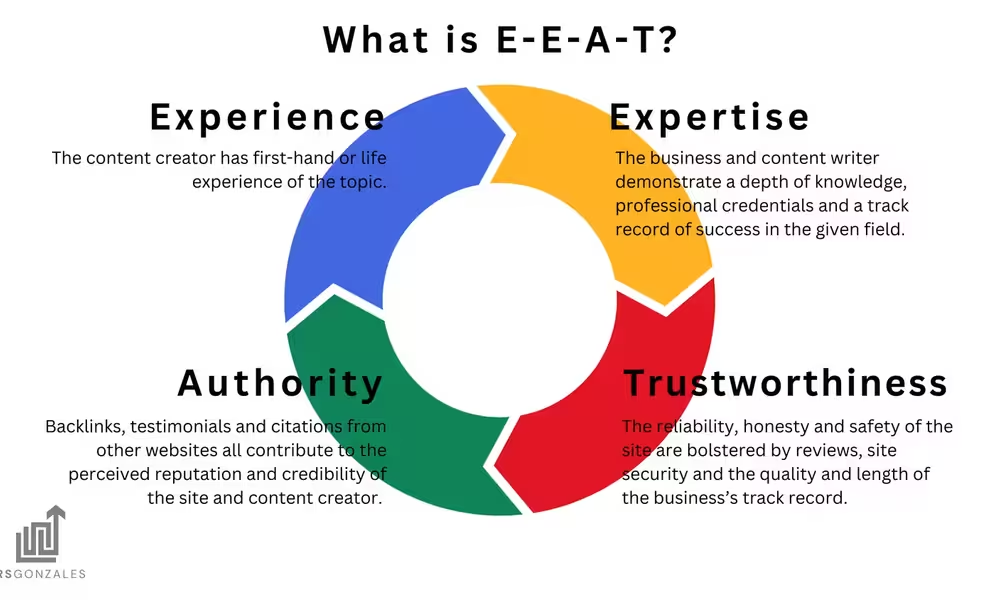
To rank today, you must inject “Humanity” into your drafts:
-
Experience: Use first-person case studies (“In my 10 years of marketing…”).
-
Expertise: Include citations from reputable sources and expert quotes.
-
Authoritativeness: Ensure your author bios link to verified social profiles and previous work.
-
Trustworthiness: Provide transparent sourcing and fact-checked data.
AI cannot “experience” a product or “feel” a market shift. By adding these human layers to an AI draft, you signal to Google that your content is more than just a statistical probability—it’s a reliable resource.
Where AI Content Wins
AI is the undisputed king of scale and structure. It currently sees an 82% success rate in technology and software sectors where documentation and technical definitions are paramount.
-
Informational Queries: Defining terms, explaining “how-to” basics, and summarizing technical whitepapers.
-
Product Descriptions: Handling thousands of SKU descriptions with consistent tone and SEO structure.
-
FAQ & Schema: Generating structured data (JSON-LD) and FAQ sections that target “People Also Ask” boxes.
-
Speed: AI allows brands to publish “news-jacked” content or fresh updates faster than a traditional editorial team, signaling high site activity to crawlers.
Where Human Content Still Dominates
Human creativity is still the primary driver for high-stakes content. In YMYL (Your Money Your Life) categories—such as health, finance, and legal advice—AI content without human oversight has a mere 34% success rate.
-
Thought Leadership: Original opinions on industry trends that haven’t been “trained” into a model yet.
-
Brand Storytelling: Emotional narratives that connect a company’s mission to its customers’ pain points.
-
Original Research: Conducting surveys, interviews, and experiments that provide new data to the web.
-
Linkability: Other sites rarely link to generic AI summaries; they link to original thoughts and primary data.
The Hybrid Strategy: The 2026 Gold Standard
The most successful marketers (73% of the top tier) have moved away from the “either/or” debate. They use a Hybrid Content Workflow:
-
AI Research: Use AI to cluster keywords, identify competitor content gaps, and build the H2/H3 structure.
-
AI First Draft: Generate the “bones” of the article to eliminate the “blank page” problem.
-
Human Editorial: A subject matter expert rewrites the intro/outro, adds personal anecdotes, injects brand voice, and inserts expert quotes.
-
Verification: A rigorous fact-check and the addition of Schema markup and internal links.
Regional Expectations
In 2026, the European Union and other regulated markets have stricter transparency requirements. Audiences in these regions demand higher sourcing transparency and clear labeling of AI assistance, making the “Human-in-the-loop” model legally and commercially necessary.
AI Overviews & Zero-Click Search
A massive shift in 2026 is the rise of Zero-Click Search. Google’s AI Overviews now answer queries directly on the search page.
Getting cited in an AI Overview can double your click-through rate. To be the source that the AI cites, your content must be:
-
Highly Structured: Use clear H2s and bullet points.
-
Fact-Dense: Cited articles cover 62% more specific facts than non-cited ones.
-
Direct: Answer the “Who, What, Where, Why” in the first paragraph of each section.
Conclusion:
The verdict for 2026 is clear: It is not AI vs. Human; it is AI + Human. Machines provide the efficiency and the “map” (SEO structure), while humans provide the “soul” and the “compass” (Experience and Trust). To win the search wars this year, you must stop treating AI as a shortcut and start treating it as a high-powered research and drafting tool that requires a human pilot.
FAQs
Q: Is AI generated content bad for SEO in 2026?
A: No. Google prioritizes helpfulness over the method of production. However, unedited, “thin” AI content is frequently filtered out by quality updates.
Q: Does Google penalize AI written content?
A: Google does not penalize AI specifically; it penalizes content that lacks original value, accuracy, or E-E-A-T signals, regardless of who (or what) wrote it.
Q: What is better for SEO — AI content or human content?
A: A hybrid approach is best. AI provides the speed and SEO structure, while human editors provide the trust and experience needed to rank long-term.
Q: How do I make AI content rank on Google?
A: You must add “Human-in-the-loop” elements: original data, personal experience, expert quotes, and high-quality internal and external linking.