
Search is evolving. Traditional SEO is no longer the only way to get visibility online. With the rise of AI-powered tools like ChatGPT and Google Gemini, a new concept has emerged: generative engine optimization (GEO).
Unlike traditional SEO, which focuses on ranking web pages in search results, GEO focuses on making your content discoverable and usable by AI systems that generate answers. Whether you’re a business owner in Lahore, a freelancer in Islamabad, or a student in Karachi, understanding GEO can give you a competitive edge in the digital world.
What is Generative Engine Optimization (GEO)?
Generative engine optimization (GEO) is the process of optimizing content so that AI-powered search engines and assistants can understand, trust, and use it when generating responses.
In simple terms:
-
SEO = Optimize for search engines (Google rankings)
-
GEO = Optimize for AI-generated answers
GEO ensures your content is:
-
Easily understood by AI models
-
Structured for quick summarization
-
Reliable and authoritative
GEO vs SEO: What’s the Difference?
| Feature | SEO | GEO |
|---|---|---|
| Focus | Search engine rankings | AI-generated answers |
| Goal | Website traffic | Visibility in AI responses |
| Content Style | Keyword-focused | Context-rich, conversational |
| Optimization | Backlinks, keywords | Clarity, structure, authority |
| Platforms | Google Search | AI tools, chatbots, voice assistants |
Key Insight:
While SEO brings users to your website, GEO brings your content directly into AI answers.
Why Generative Engine Optimization Matters in 2026
AI search is rapidly transforming how people access information.
Key trends driving GEO:
-
Rise of AI assistants and chatbots
-
Voice search and conversational queries
-
Zero-click searches (users get answers instantly)
-
Personalized AI-generated results
For example, instead of searching “best marketing agency in Lahore,” users now ask AI tools directly—and receive summarized answers without clicking links.
How AI Search Works (And Why GEO Matters)
AI systems like Microsoft Copilot and Perplexity AI don’t just list links—they generate answers by:
-
Understanding user intent
-
Scanning multiple sources
-
Summarizing key insights
-
Delivering a direct response
This means:
If your content isn’t structured properly, it won’t be used in AI-generated answers—even if it ranks well in SEO.
How to Optimize for AI Search (GEO Strategy)
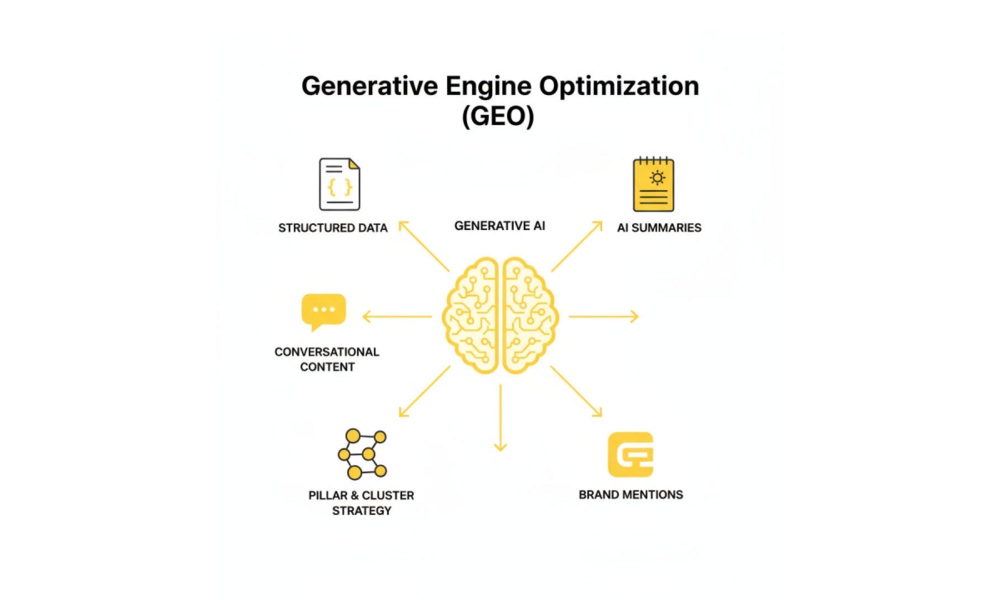
1. Create Clear, Structured Content
-
Use headings (H2, H3)
-
Write short, focused paragraphs
-
Answer questions directly
2. Focus on Answer-Based Content (AEO Style)
-
Include FAQs
-
Provide concise answers
-
Use bullet points and lists
3. Build Topical Authority
-
Cover topics in depth
-
Use related keywords like:
-
AI search optimization
-
AI search ranking
-
optimize for AI search
-
4. Use Natural, Conversational Language
-
Write like you’re explaining to a person
-
Avoid keyword stuffing
-
Focus on clarity and usefulness
5. Ensure Content Accuracy & Trustworthiness
-
Use updated, reliable information
-
Add examples and real-world insights
Practical Example of GEO Optimization
Traditional SEO Content:
“Best digital marketing services Lahore with affordable pricing…”
GEO-Optimized Content:
“What are the best digital marketing services in Lahore?”
-
Provide a clear answer
-
List options
-
Add short explanations
This format makes it easier for AI to extract and present your content.
GEO for Businesses in Pakistan
For local businesses in Pakistan, GEO is a powerful opportunity.
Use location-based optimization:
-
“Best AI marketing agency in Lahore”
-
“SEO and GEO services in Islamabad”
-
“Digital marketing experts in Karachi”
Local GEO benefits:
-
Appear in AI-generated recommendations
-
Reach users without relying on clicks
-
Build brand authority faster
Example:
A café near Badshahi Mosque can optimize content like:
“Best cafés near Badshahi Mosque in Lahore” to appear in AI responses.
Common Mistakes to Avoid in GEO
-
Writing only for keywords, not meaning
-
Ignoring content structure
-
providing clear answers
-
Using outdated or unreliable information
-
Overloading content with fluff
Future of AI Search Optimization
The future is shifting toward:
-
Conversational search experiences
-
AI-generated summaries
-
Personalized recommendations
Businesses that adopt generative engine optimization early will dominate visibility in AI-driven platforms.
Conclusion
Generative engine optimization (GEO) is not just a trend—it’s the future of digital visibility. As AI continues to reshape how people search and consume information, businesses and content creators must adapt. If you’re in Pakistan—whether in Lahore, Islamabad, or Karachi—now is the perfect time to start optimizing for AI search.
FAQs
Q1: What is generative engine optimization in Pakistan?
-
A: Generative engine optimization is optimizing content for AI search tools to improve visibility in AI-generated answers in Pakistan.
Q2: How is GEO different from SEO?
-
A: GEO focuses on AI-generated responses, while SEO focuses on ranking in search engine results.
Q3: How can I optimize for AI search ranking?
-
A: Use clear structure, answer-based content, and conversational language to optimize for AI search.
Q4: Is GEO important for local businesses in Lahore or Karachi?
-
A: Yes, GEO helps local businesses appear in AI recommendations for location-based searches.
Q5: What tools support AI search optimization?
-
A: Tools like ChatGPT, Google Gemini, and Perplexity AI use GEO principles to generate answers.