
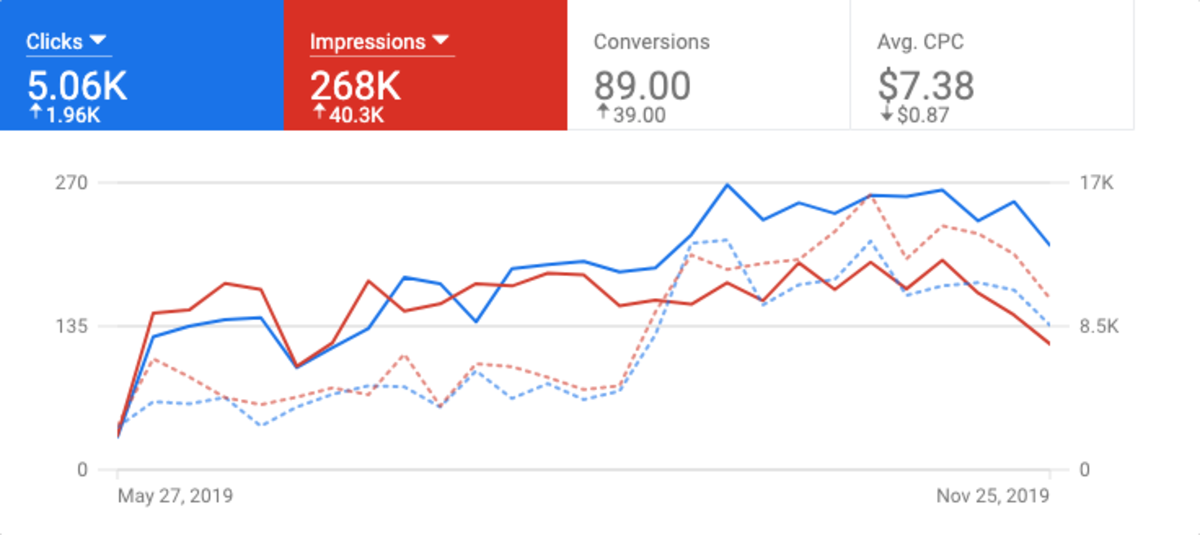
This real-world ad experiment split a $1,000 budget between Google Ads and Facebook to measure pure lead generation results. Facebook delivered higher volume with 31 leads at a low $12.90 CPL, while Google produced fewer (18) but higher-quality leads at $33.33 CPL, with stronger conversion intent. Overall, the campaign generated 49 leads at an average $20.40 CPL, showing that Facebook wins on cost efficiency, but Google excels in lead quality—proving that combining both platforms offers the most balanced and effective advertising strategy.
Most marketers love to talk about “synergy,” “brand awareness,” and “top-of-funnel engagement.” But if you’re a small business owner or a founder, you probably care about one thing: If I put $1 into an ad, how much comes back out?
We decided to stop talking about theory and start talking about receipts. We took a crisp $1,000 bill and split it across the two biggest advertising giants on the planet to see what actually happens in a real-world scenario. No “estimated” reach, no “potential” clicks—just raw data. In this ad campaign results case study, we are pulling back the curtain on our lead generation experiment to show you exactly where the money went and, more importantly, exactly how many people raised their hands to do business with us.
Section 1: The Setup — What We Were Trying to Achieve
For this experiment, we acted as a B2B service provider targeting small-to-medium-sized business owners in the United States.
-
The Goal: Pure lead generation. We weren’t looking for “likes” or website traffic. We wanted names, emails, and phone numbers of people interested in a professional consultation.
-
The Platforms: We chose a head-to-head battle: Google Ads vs. Facebook Ads.
-
The Budget: $1,000. Why? Because $1,000 is the “threshold of truth” for most small businesses. It’s enough to get statistically significant data without betting the farm.
-
KPIs (Key Performance Indicators):
-
CPL (Cost Per Lead): Our target was under $25.
-
Conversion Rate: We aimed for a 5% lead-to-form completion rate.
-
Lead Volume: We hoped for at least 40 total leads.
-
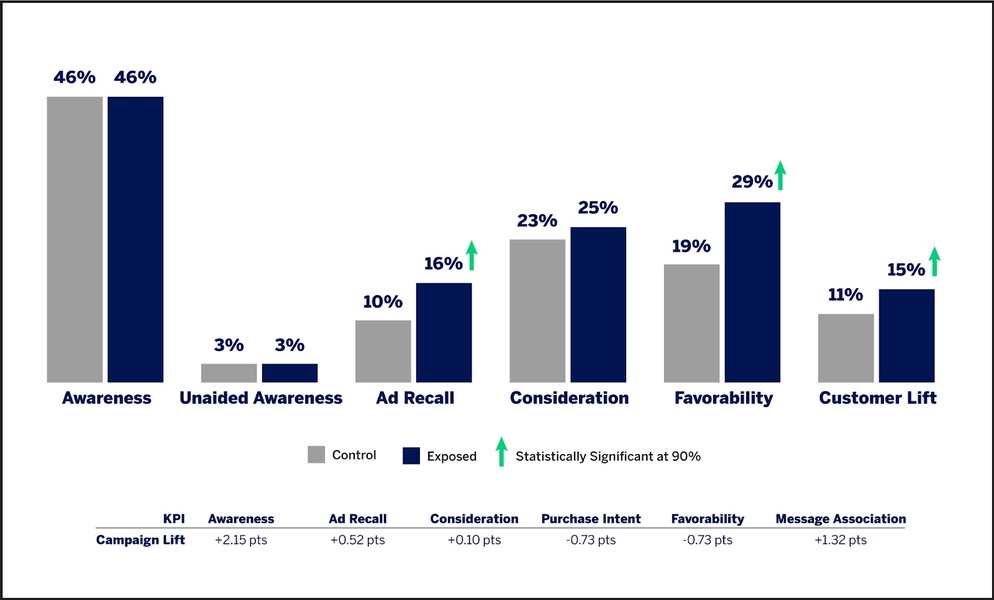
Section 2: How We Split the $1,000 Budget
We didn’t go 50/50. Based on historical industry data, we knew that Google usually costs more per click but offers higher intent, while Facebook offers higher volume but lower intent.
-
Google Ads Allocation: $600 (60%)
-
Facebook Ads Allocation: $400 (40%)
-
Campaign Duration: 14 Days.
-
Daily Spend: Roughly $42 on Google and $28 on Facebook.
We chose this split because Google Search is “pull” marketing—people are actively searching for a solution. Facebook is “push” marketing—we are interrupting their scroll. We felt the “pull” deserved a larger share of the pie.
Section 3: Google Ads Results — The Breakdown
Google is where people go when they have a problem they need to solve now. We ran Search Ads targeting high-intent keywords like “professional B2B services” and “business consulting near me.”
| Metric | Results |
| Total Spend | $600 |
| Impressions | 4,200 |
| Clicks | 186 |
| CTR (Click-Through Rate) | 4.42% |
| Total Leads | 18 |
| Cost Per Lead (CPL) | $33.33 |
The Verdict on Google: The leads were incredibly high quality. These were people ready to talk. However, the $33.33 CPL was higher than our $25 goal. The competition for these keywords in 2026 is fierce, driving up the Cost Per Click (CPC).
Section 4: Facebook Ads Case Study — The Breakdown
On Facebook (Meta), we used “On-Platform Lead Forms.” This means the user never had to leave Facebook; they just tapped the ad, and their info was pre-filled.
| Metric | Results |
| Total Spend | $400 |
| Reach | 18,500 |
| Clicks | 412 |
| Lead Form Submissions | 31 |
| Cost Per Lead (CPL) | $12.90 |
The Verdict on Facebook: Facebook was the clear winner on volume. We generated nearly double the leads for $200 less than we spent on Google. However, “intent” was lower. About 20% of these leads didn’t remember filling out the form when we called them back.
Section 5: Combined Campaign Results — The Full Picture
When we look at the ad campaign results case study as a whole, the numbers are quite revealing:
-
Total Spent: $1,000
-
Total Leads Generated: 49
-
Blended Cost Per Lead: $20.40
-
ROI Winner: Facebook (on pure volume); Google (on lead-to-client conversion).
While Facebook gave us a lead generation cost of $12.90, Google’s $33.33 leads were 3x more likely to actually book a follow-up meeting. This proves the old adage: you get what you pay for.
Section 6: What We Got Wrong (Honest Mistakes)
In the spirit of transparency, we messed up a few things:
-
Too Many Keywords: On Google, we initially targeted 20 keywords. We realized 15 of them were just eating budget without converting. We should have stuck to the top 5.
-
Weak Lead Magnet: Our Facebook ad offered a “Free Consultation.” It was too generic. When we changed it to a “15-Minute Business Audit,” the CTR jumped immediately.
-
Mobile Landing Page: Our Google landing page was a bit slow on mobile. We likely lost 10–15% of our traffic to “bounce” because the page took 4 seconds to load.
Section 7: What We Got Right
-
The Facebook “Lookalike” Audience: We uploaded a list of our current clients to Facebook and told the AI to “Find more people like this.” This was the single biggest reason for our low $12.90 CPL.
-
Negative Keywords on Google: We aggressively excluded words like “jobs,” “free,” and “salary.” This kept our $600 from being wasted on people looking for employment rather than services.
-
The “Call” CTA: On the Google landing page, we put a “Click to Call” button. Six of our 18 leads were direct phone calls, which are the most valuable leads you can get.
Section 8: Lead Generation Cost — Is $1,000 Enough to Test?
Is a $1,000 budget enough? In 2026, the answer is yes, but barely.
Industry benchmarks suggest that for B2B, a $20–$50 CPL is standard. Our blended average of $20.40 means we performed slightly better than average.
If your lead generation cost is too high with $1,000, it usually means your offer is weak or your landing page is broken. You don’t need to spend $10,000 to find that out. $1,000 is the perfect “diagnostic” budget.
Section 9: Key Takeaways for Your Own Ad Campaign
If you are planning to run your own test, here is the blueprint:
-
Pick the Platform for the Intent: If you have a “need-it-now” service (like a plumber or lawyer), go 100% Google. If you have a “visual” or “lifestyle” service, go 100% Facebook/Instagram.
-
Track Everything: Use UTM parameters and a CRM to ensure you know exactly which ad produced which lead.
-
Nail the Landing Page: A bad landing page will make a great ad look like a failure.
-
Consult the Pros: If this feels overwhelming, check out resources like brandsholder.com for deeper insights into scaling your marketing.
Conclusion
The final tally: $1,000 spent, 49 leads generated, $20.40 per lead.
Was it worth it? Absolutely. Even if only 10% of those leads turn into a $1,000 client, we have turned $1,000 into $5,000. That is the power of a data-driven ad campaign results case study.
Advertising isn’t a gamble; it’s an investment in data. Now that we know Facebook is cheaper and Google is higher quality, we can scale our next $5,000 budget with total confidence.
Frequently Asked Questions
Q1: Which platform is better for a $1,000 budget: Google or Facebook?
It depends on your goal. If you want a high volume of leads quickly, Facebook Ads usually offer a lower lead generation cost. If you want leads that are “ready to buy,” Google Search Ads are superior because they target people actively searching for your service.
Q2: What is a “good” cost per lead (CPL) in 2026?
While it varies by industry, a B2B lead typically costs between $25 and $60. Real estate and insurance can be higher, while e-commerce and local retail are often lower. Our $20.40 result is considered high-performing.
Q3: How long should I run a $1,000 ad test?
We recommend at least 14 days. This allows the platform’s AI (Google’s “Smart Bidding” or Facebook’s “Learning Phase”) to optimize and find your best audience. Spending $1,000 in 2 days usually results in wasted spend.
Q4: Can I run ads without a website?
Yes, especially on Facebook. You can use “Lead Gen Forms” that keep the user on the platform. However, for Google Search, having a high-converting landing page is almost always necessary for success.
Q5: What is the most common mistake in a $1,000 ad campaign?
The most common mistake is “setting it and forgetting it.” You must check your ads daily, turn off underperforming creatives, and add negative keywords to ensure your limited budget is only being spent on the highest-quality traffic.