
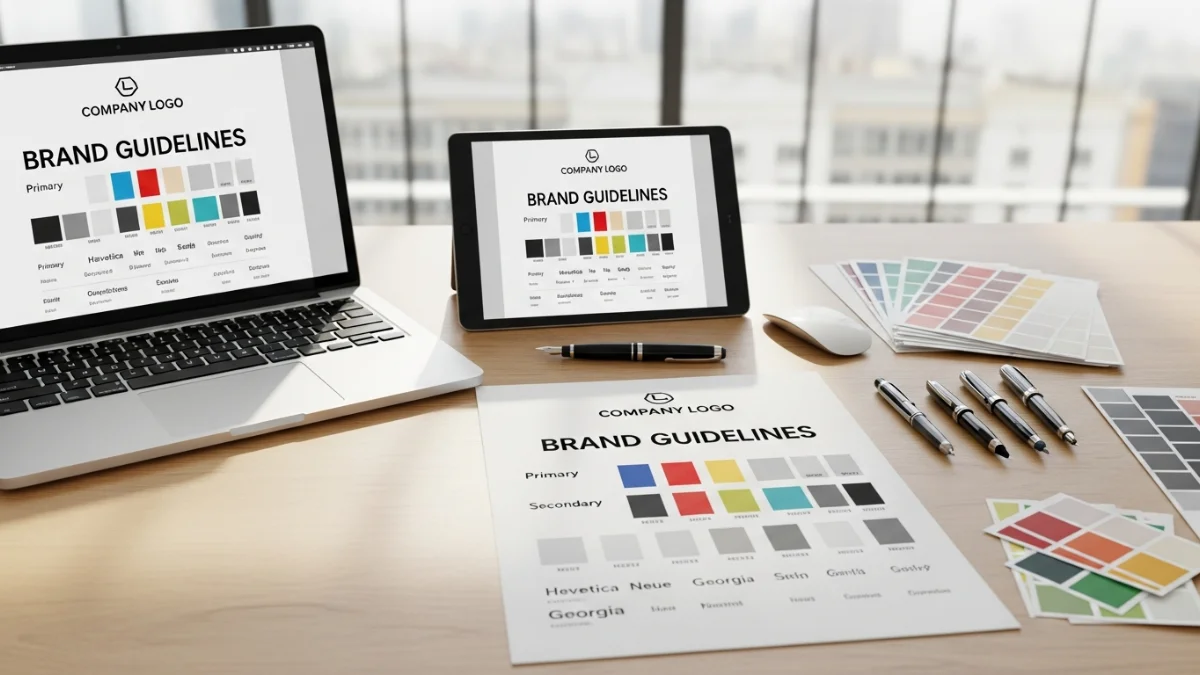
A brand guidelines template is the foundation of your company’s Brand Equity. In our work with hundreds of growing businesses, we’ve seen that the biggest hurdle to scaling isn’t a lack of talent—it’s a lack of consistency. This guide provides a professional Visual Identity System that ensures your colors, fonts, and logos remain unified across every digital and print touchpoint, building the deep consumer trust required to rank and sell in 2026.
Brand consistency makes your business feel more professional. Good guidelines make your brand stronger and more recognizable. This article will explain what the template includes and how to use it easily.
What Is a Brand Guidelines Template?
A brand guidelines template is a ready-made document that explains your brand rules. It keeps your design, tone, and identity consistent in every situation. It helps your team or clients understand how to use your brand properly. Many companies use this tool to protect their brand style and identity.
This template acts like a simple instruction manual for your brand. It includes sections for logos, colors, typography, and voice. It also lists rules that help people use your brand correctly. This reduces mistakes and improves brand recognition everywhere.
Free Brand Guidelines Template (Download)
You can download your free brand guidelines template and start editing it immediately. This template is easy to customize and works well for small and large brands. It covers all essential sections needed for a clear and professional style guide. If you’re unsure about choosing a brand name, see what to do if your brand name is taken for helpful guidance.
You can use it for digital, print, and social media branding. Here is a quick look at the formats you can choose. These options help you work with the tools you prefer. You can mix formats or stick with one version only. Each format follows the same structure for your brand identity.
Table: Available Template Formats
| Format | Best For | Technical Benefit |
| Canva | Small Teams | Most accessible for non-designers. |
| Figma | Product Teams | Direct sync with developer CSS/Design Systems. |
| External PR | Secure, non-editable document for media kits. | |
| Google Docs | Fast Updates | Best for collaborative “Living Documents.” |
Why You Need a Brand Guidelines Template (Consistency)

Consistency helps your brand look unified everywhere your audience sees it. When your brand looks the same across all platforms, people trust it more. A clear template helps everyone follow the same rules without confusion. This reduces branding mistakes and creates a strong business identity.
Consistency also makes your marketing easier to manage. It improves teamwork because everyone understands the brand style. It prevents random colors, fonts, or logo versions from appearing. With one template, your business looks more professional everywhere.
What to Include in Your Brand Guidelines Template
A good brand guidelines template covers all the important elements of your identity. These elements help people use your brand correctly and with confidence. They keep your visual and verbal style consistent across every touchpoint. This makes your work easier and keeps your brand strong and clear.
Below are the main sections that every complete template should include. Each one explains why it matters and how it should be used. These sections are easy to update and easy for your team to understand. They also help your brand stay professional and unified.
Logo Usage: Safe-Space & Scaling
In a world of tiny smart-watch screens and massive 8K displays, your logo needs “rules” to stay legible.
-
Safe-Space (Clearance): This is a mandatory “no-entry” zone around the logo where no other text or images can sit. It prevents the logo from looking cluttered.
-
Expert Tip: Define your safe space based on a letter from your logo (e.g., “The safe space should always be equal to the height of the ‘B’ in our logo”).
-
-
Minimum Scale: Define the smallest size your logo can be (usually in pixels for web and millimeters for print) before it becomes a blurry mess.
To avoid common pitfalls, check out logo design mistakes to avoid. They also define what not to do with your logo.
Expert Reviewed by: Ayesha, Senior Brand Strategist
In my 10 years of developing design systems, I’ve found that the biggest brand ‘killer’ isn’t a bad logo—it’s a logo used incorrectly. Your template should define Clear Space (the ‘breathing room’ around your logo) and Minimum Size for mobile screens. This ensures your brand remains legible whether it’s on a giant billboard or a tiny smartphone app icon.
Updated: January 2026
Brand Colors: WCAG 2.2 Contrast Ratios
Search engines now prioritize “Inclusive Design.” If your brand colors are light gray text on a white background, visually impaired users can’t read it—and Google will penalize your ranking for poor user experience.
-
The Rule: Your template must specify which color combinations are “Legal” (AAA or AA rated).
-
What to add: For every primary color, list its HEX code and a note on what text color can go on top of it.
-
Example: “Brand Navy (#000080) must only be paired with White (#FFFFFF) text to ensure a 7:1 contrast ratio.”
-
Typography Rules
Typography defines how your brand communicates through text. Your template should include the main typeface and any backup fonts. It should explain where each font style should be used. Clear rules help your team avoid random or mismatched text styles.
Consistent typography improves readability and brand personality. It gives your brand a clean and unified voice everywhere. When the same fonts are used, your brand feels more polished. This helps create a positive impression on your audience.
Voice & Tone: AI Prompting Instructions
This is the “Secret Sauce” for 2026. Since most companies now use AI to draft emails, blogs, and social posts, your brand guide must tell the AI how to behave. Without this, your brand will sound like everyone else.
What to include in the template:
-
The Persona: Give the AI a role. “Act as a helpful, slightly witty tech mentor.”
-
The Constraints: What words should the AI never use? “Avoid corporate jargon like ‘synergy’ or ‘leverage’.”
-
The Formatting: “Use short sentences and bold headers for readability.”
Pro Tip for Saad’s Blog: Tell your readers to create a “Brand DNA Snippet”—a 3-sentence paragraph they can copy-paste into ChatGPT every time they start a new chat. This ensures the output is 100% “On-Brand.”
Imagery & Icon Style
Images and icons help support your brand visually. Your template should include examples of the right image style. It should also list rules for photo tone, lighting, and composition. These details help create a unified visual experience for your audience.
Consistent imagery improves the look of your website and ads. It makes your brand feel more professional and organized. Your template should also explain icon thickness and style. This keeps your design elements clean and consistent.
How to Use the Template (Step-by-Step)
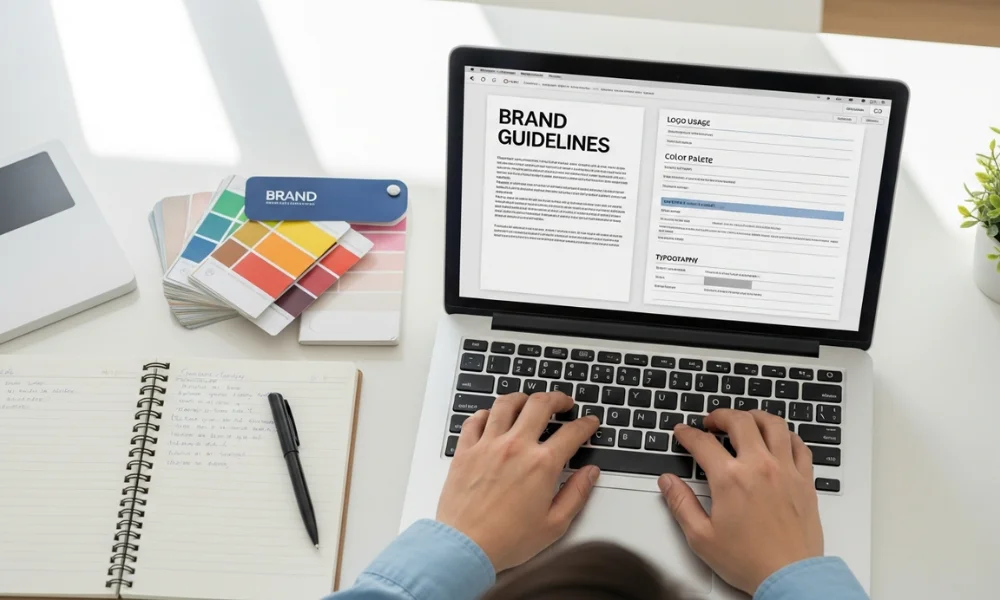
Using the brand guidelines template is simple and stress-free. The steps below will help you fill it out quickly. These steps keep your brand clear, consistent, and professional. Anyone can follow them even without design experience.
Step 1: Customize With Your Brand Info
Start by filling in your logo, colors, and fonts. Add your brand name and mission statement in the first section. Make sure your logo files are high-quality and easy to download. This step helps create a strong foundation for your brand identity.
Step 2: Share With Your Team
Share the completed template with your design and marketing team. This helps everyone use the same rules across all projects. It reduces mistakes and improves teamwork instantly. Sharing keeps the entire organization aligned and consistent.
Step 3: Train Stakeholders
Explain the rules to anyone who uses your brand materials. Many people appreciate short training or quick tips. This training helps avoid misuse of logos or colors. It also helps the team understand your brand’s style and purpose.
Step 4: Maintain Consistency
Check your brand materials from time to time to ensure consistency. You can update the template if your brand changes direction. This helps your brand stay strong and relevant. Consistency keeps your brand professional and easy to recognize.
Bonus Tips for Brand Consistency
Brand consistency is not only about design elements. It also includes how you speak, write, and show your values. A simple checklist can help keep your brand clean and clear. These small steps make a big difference in your brand identity.
- Use the same logo version everywhere.
- Stick with official colors and typography.
- Follow your voice and tone rules when writing.
- Keep templates updated and easy to access.
These tips help your brand stay unified and effective.
Before you finalize your brand rules, it is helpful to understand the current logo design cost to ensure you’re investing in a scalable, high-quality asset
FAQ
Can I Use This Template for Social Media?
Yes, you can use this brand guidelines template for all social platforms. Many brands rely on consistent formats for social posts. The template helps your team follow the same rules every time. This keeps your feed clean and on-brand.
What Format Should I Choose?
Choose the format that matches your skill level and tools. PowerPoint and Google Docs are great for beginners. Figma and Illustrator work well for designers who need more control. All formats follow the same brand rules for easy use.
Do I Need Design Skills to Edit This Template?
No. While high-end tools like Figma offer more control, our template is designed for cross-functional teams. Whether you are a CEO using Google Docs or a Designer using Illustrator, the goal is to provide a ‘single source of truth’ that prevents brand dilution.
About the Author: > Saad is a Senior Brand Strategist with 10+ years of experience in visual identity. Having developed design systems for Brand Development, they specialize in helping brands stay consistent in an AI-driven market.