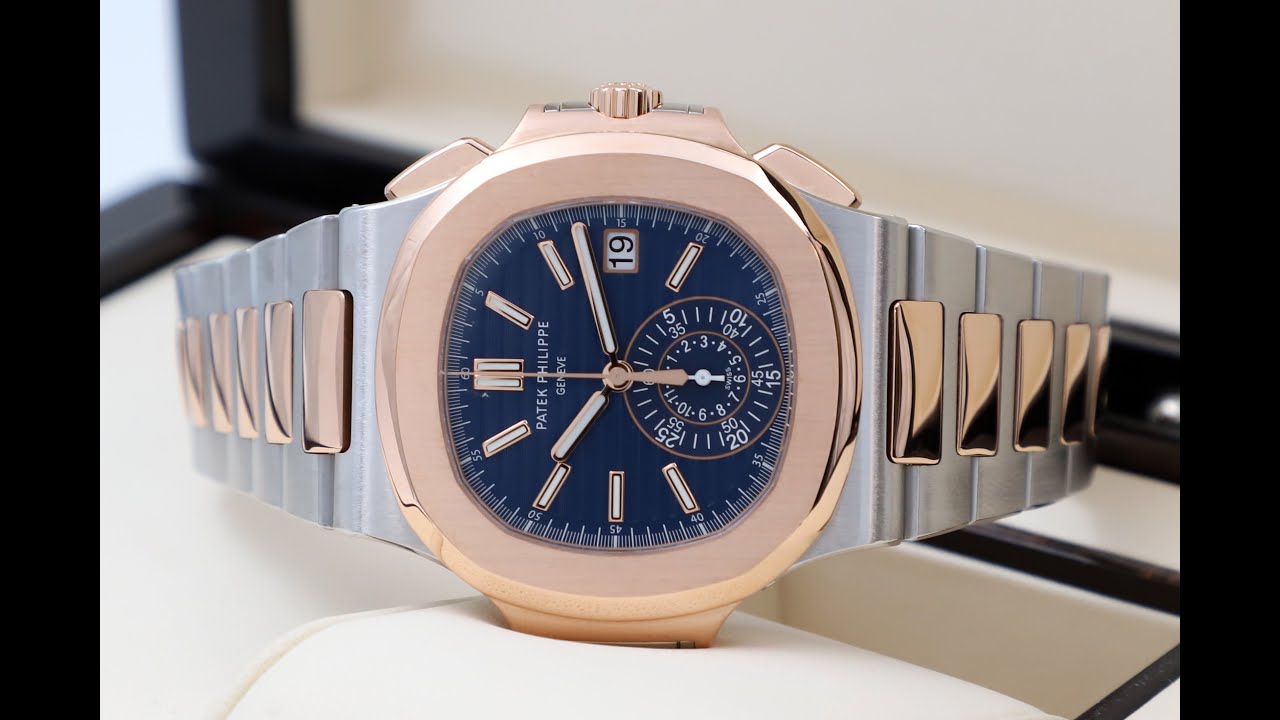
As of May 2026, the Patek Philippe Nautilus remains a cornerstone of the luxury investment market, bolstered by its highly anticipated 50th-anniversary celebration at Watches & Wonders 2026. While the broader market has shifted toward “stealth wealth,” the Nautilus maintains its status through strategic scarcity and the release of limited-edition anniversary models, such as the 38mm platinum Ref. 5610/1P and the white gold Ref. 5810/1G, which honor the original 1976 design by omitting the center seconds hand. Even with the introduction of the square-cased Cubitus collection—the brand’s first new line in decades—the Nautilus has seen a “halo effect” rather than a decline, as collectors double down on the original octagonal silhouette as a more “pure” asset. With the iconic steel 5711 now firmly in the realm of discontinued legends and trading at stabilized, high-floor prices, the model continues to reward long-term holders, proving that Patek Philippe’s commitment to family-owned independence and production discipline effectively insulates the watch against the volatility seen in traditional financial markets.
You could put a down payment on a house in the suburbs—or you could buy a watch. For the uninitiated, spending $50,000 (or significantly more) on a piece of stainless steel that tells the same time as your smartphone sounds like a fever dream. Yet, across the United States, from the boardrooms of Manhattan to the tech hubs of Silicon Valley, thousands of affluent investors are choosing the watch.

The Patek Philippe Nautilus isn’t just a timepiece; it is a global currency of cool. Designed by the legendary Gérald Genta with an iconic octagonal bezel inspired by a ship’s porthole, it has transitioned from a radical “luxury sports watch” into a financial powerhouse. But with the market cooling from its 2022 fever pitch, many are asking: is the Patek Nautilus worth it—really? To find out, we have to look past the hype and dive into ten years of hard data.
It’s Not Just a Watch. It’s a Waiting List With a Wrist Strap.
Born in 1976, the Nautilus was an anomaly. At a time when luxury meant gold and slim profiles, Patek Philippe released a chunky, steel watch that cost more than many gold timepieces. This “steel paradox” remains the core of its allure today.
What makes a Patek Nautilus investment so distinct from other luxury goods is the math of scarcity. While Rolex produces roughly a million watches a year, Patek Philippe’s total annual output is estimated at around 66,000. Only a fraction of those are Nautilus models. This perpetual undersupply, combined with Patek’s “Holy Trinity” status alongside Audemars Piguet and Vacheron Constantin, creates a ceiling-less demand. In the current market, walking into an authorized dealer and buying one at retail is essentially impossible; you don’t find a Nautilus, the Nautilus—after a years-long vetting process—finds you.
The 10-Year Price Story: Real Numbers, Real Returns
To understand the nautilus 10 year returns, we have to look at the legendary Reference 5711. In 2015, you could find a pre-owned 5711 for approximately $25,000. It was a respected, expensive watch, but it wasn’t yet a “super-asset.”
Everything changed around 2019. Prices began a vertical climb that defied logic. At the peak of the market in mid-2022, some 5711s were trading for over $140,000. While the market has since corrected, the “floor” remains remarkably high. As of mid-2025, a mint-condition pre-owned 5711 sits around $94,440
The Nautilus Decade (2015–2025)
-
2015 Purchase Price: ~$25,000
-
2025 Market Value: ~$95,000+
-
Total Return: ~280% – 300%
-
S&P 500 Comparison: Historically ~10-12% annually. The Nautilus has frequently doubled that pace in “hold” periods.
Even with the 2022–2024 price dip, long-term holders have seen their wealth triple. The correction mostly burned “flippers” who bought at the $150,000 peak; those who viewed it as a decade-long play are still sitting on a gold mine.
Nautilus Appreciation: What Drives the Value Up?
Why does a steel watch appreciate like a rare Picasso? Several factors fuel nautilus appreciation:
-
Fixed Supply via Discontinuation: In 2022, Patek Philippe discontinued the steel 5711. Its successor, the 5811, was released only in white gold. By removing the steel entry point, Patek made existing steel models “vintage” overnight.
-
The “Box and Papers” Premium: Condition is king, but provenance is the emperor. Selling a Nautilus without its original box and papers can drop its value by roughly 8.3%.
-
Global Liquidity: Whether you are in Dubai, London, or Los Angeles, a Nautilus is liquid. It can be converted to cash faster than almost any piece of real estate.
-
Cultural Dominance: From athletes to tech billionaires, the Nautilus has become the ultimate “if you know, you know” status symbol, ensuring demand remains high even as economic cycles shift.
Luxury Watch ROI: How Does the Nautilus Stack Up?
When analyzing luxury watch ROI, the Nautilus is often in a league of its own. Over the last five years, the Nautilus 5711R (the rose gold variant) rose by 38.5%, significantly outperforming the broader watch market index, which saw more modest gains of around 5%.
At the height of the 2022 craze, some specific Nautilus references saw value increases of 400% to 700% compared to their 2018 prices. However, the true luxury watch ROI benefit is “dual utility.” Unlike a stock portfolio or a bar of gold locked in a vault, you can wear your Nautilus to a charity gala or a business lunch. It is a productive asset that provides social capital while simultaneously holding—and usually growing—financial capital.
Your Portfolio Can’t Go on Your Wrist — Your Nautilus Can
Is the Patek Nautilus worth it for a buyer entering the market in 2025? The answer depends on your entry point. While the “retail price” might be lower, the reality is that steel 5711 models now trade between $120,000 and $160,000 on the open market for the best examples.
-
It IS worth it if: You are a long-term collector looking to diversify a portfolio with a tangible asset that has proven resilience against inflation.
-
It IS NOT worth it if: You are looking for a “get rich quick” flip. The days of buying a watch on Tuesday and selling it for double on Thursday are largely over.
A Patek Nautilus investment should be viewed as a marathon. It is an asset for the person who values the intersection of mechanical art and fiscal stability.
Buying Smart: Practical Tips for US Buyers
If you’re ready to pull the trigger, follow these rules to protect your capital:
-
Provenance is Everything: Never buy without the original “Certificate of Origin” and the box. These documents are the watch’s “title.”
-
Trust the Platform: Use established US-based dealers like Bob’s Watches or platforms like WatchCharts to verify pricing. Avoid “too good to be true” deals on social media.
-
The 10-Year Lens: Ask yourself if you’ll love the watch in 2035. If the answer is yes, the short-term market fluctuations won’t matter.
-
Authentication is Mandatory: Given the rise of “super-clones,” have any secondary market purchase verified by a third-party expert before funds are released.

CONCLUSION
At the end of the day, $50,000 (or $150,000) buys you more than just gears and springs. It buys a legacy from the last family-owned, independent watch manufacturer in Geneva. Since 1932, the Stern family has steered Patek Philippe with a “discipline over profit” philosophy—famously discontinuing the hyper-popular 5711 to protect the brand’s long-term exclusivity rather than over-producing to meet demand.
Current President Thierry Stern has been vocal about keeping the brand independent, ensuring that a Patek Nautilus isn’t just a commodity owned by a corporate conglomerate, but a piece of heritage designed to last generations. The case for nautilus appreciation remains rock-solid because its “shareholders” aren’t on Wall Street; they are the family members committed to preserving rarity.
FAQS
1. Why is the Patek Philippe Nautilus so expensive if it’s made of steel?
In the world of high horology, steel can be more valuable than gold due to scarcity and demand. Patek Philippe intentionally limits the production of steel sports models to maintain exclusivity. When demand significantly outstrips supply, the secondary market price skyrockets far beyond the original retail cost.
2. Is the Patek Nautilus a good investment for 2026?
Historically, the nautilus 10 year returns have outperformed many traditional asset classes. While the “hype” prices of 2022 have stabilized, the Nautilus remains a blue-chip asset. It is generally considered a safe haven for long-term capital preservation rather than a short-term speculative play.
3. What is the “Waitlist Reality” at US authorized dealers?
For most buyers, getting a Nautilus at retail price from a dealer is nearly impossible without a multi-year, high-spend relationship with that jeweler. This is why many investors turn to the secondary or “grey” market, paying a premium to skip the decade-long wait.
4. How does the “Box and Papers” factor affect luxury watch ROI?
In the luxury market, provenance is everything. A Nautilus missing its original Certificate of Origin can see a value drop of 8% to 15%. For the best luxury watch ROI, always ensure the watch is a “full set” with its original packaging and documentation.
5. Has the release of the Patek Philippe Cubitus affected Nautilus appreciation?
While the new Cubitus collection offers a similar aesthetic, it has largely reinforced nautilus appreciation. Collectors often view the original Genta-designed Nautilus as the “pure” investment, keeping demand for the 5711 and 5811 references at an all-time high.