
Everyone talks about SEO, but few explain its core: making your website easy for Google to understand, trust, and recommend. In simple terms, SEO works through three pillars—on-page content quality, off-page credibility like backlinks, and solid technical performance. The real key is matching search intent, meaning you create content based on what users actually want. In 2026, success in SEO depends less on tricks and more on delivering genuine value, strong user experience, and consistent, helpful content over time.
You’ve heard it a hundred times. “You need SEO.” “SEO will grow your business.” “SEO is everything.” But then you ask one simple question — how does SEO actually work? — and suddenly everyone goes quiet or drowns you in technical jargon you didn’t sign up for.
Here’s the truth: SEO explained simply is not that complicated. It has been made to sound complicated, but the core idea is refreshingly straightforward. SEO — Search Engine Optimization — is the process of making your website easy for Google to find, understand, and trust, so it shows your pages to the right people at the right moment.
That’s it. That’s the part nobody explains.
In this beginner SEO guide, we’re going to walk through how SEO really works, what the parts actually mean, and what you should be doing — starting today.
What Is SEO, Really? (The Part Everyone Skips)
Most people define SEO as “getting to the top of Google.” That’s the result, not the explanation. Understanding how SEO really works means understanding what Google is actually trying to do.
Google has one job: give the person searching the most helpful, accurate, and trustworthy answer possible. Every time someone types something into that search bar, Google sends out digital “bots” — called crawlers — to scan billions of pages and decide which ones best answer that query. Your job with SEO is to make Google’s job easier by clearly signaling: “My page is the best answer to this question.”
When you do that consistently, Google rewards you with visibility. When you ignore it, your pages sit on page 7 where no one will ever find them.
How SEO Really Works: The 3 Pillars You Need to Know
Every successful SEO strategy — whether for a blog, a business website, or an online store — is built on three core pillars. Think of them like the three legs of a stool. Remove one, and everything falls.
1. On-Page SEO — What Your Content Says
On-page SEO is everything you do on your website to help Google understand your content and help your visitors find value in it.
This includes:
Keywords and Search Intent: Before you write a single word, you need to know what your audience is actually searching for. Not just the words — but why they’re searching. Someone typing “what is SEO” wants a simple explanation. Someone typing “best SEO tools 2026” is comparing options before buying. These require completely different kinds of content. Matching your content to the reason behind the search is the single most important on-page SEO skill you can develop.
Title Tags and Headings: Your page title is the first thing Google reads. It should include your main keyword naturally and tell the reader exactly what they’re getting. The H1, H2, and H3 headings on your page help Google map the structure of your content — like a table of contents for a search engine.
Content Quality and Length: Google in 2026 does not just count keywords. It measures whether real people find your content useful. If visitors land on your page and immediately leave, Google sees that as a signal that your content didn’t deliver. Write for humans first. Cover the topic completely. Answer the question better than anyone else.
Meta Descriptions: This is the short paragraph that appears under your page title in search results. It doesn’t directly affect your ranking, but it does affect whether someone clicks — and clicks matter.
2. Off-Page SEO — What Others Say About You
If on-page SEO is what you say about yourself, off-page SEO is what the rest of the internet says about you. And Google pays close attention to that.
The biggest off-page factor is backlinks — links from other websites pointing to yours. Think of each backlink as a vote of confidence. When a reputable website links to your page, it tells Google: “This content is worth referencing.” The more trustworthy the site linking to you, the more powerful that vote.

This doesn’t mean you need hundreds of backlinks overnight. Even a handful of quality links from relevant, credible sources can significantly improve your rankings — especially compared to zero links at all.
Other off-page signals include mentions of your brand on social media, reviews, and your overall reputation across the web. Google is increasingly smart at understanding whether your brand is genuinely trusted in your niche.
3. Technical SEO — How Your Website Is Built
Technical SEO is the behind-the-scenes foundation. It doesn’t matter how great your content is if Google can’t properly access or read your website.
The key technical factors every beginner should know:
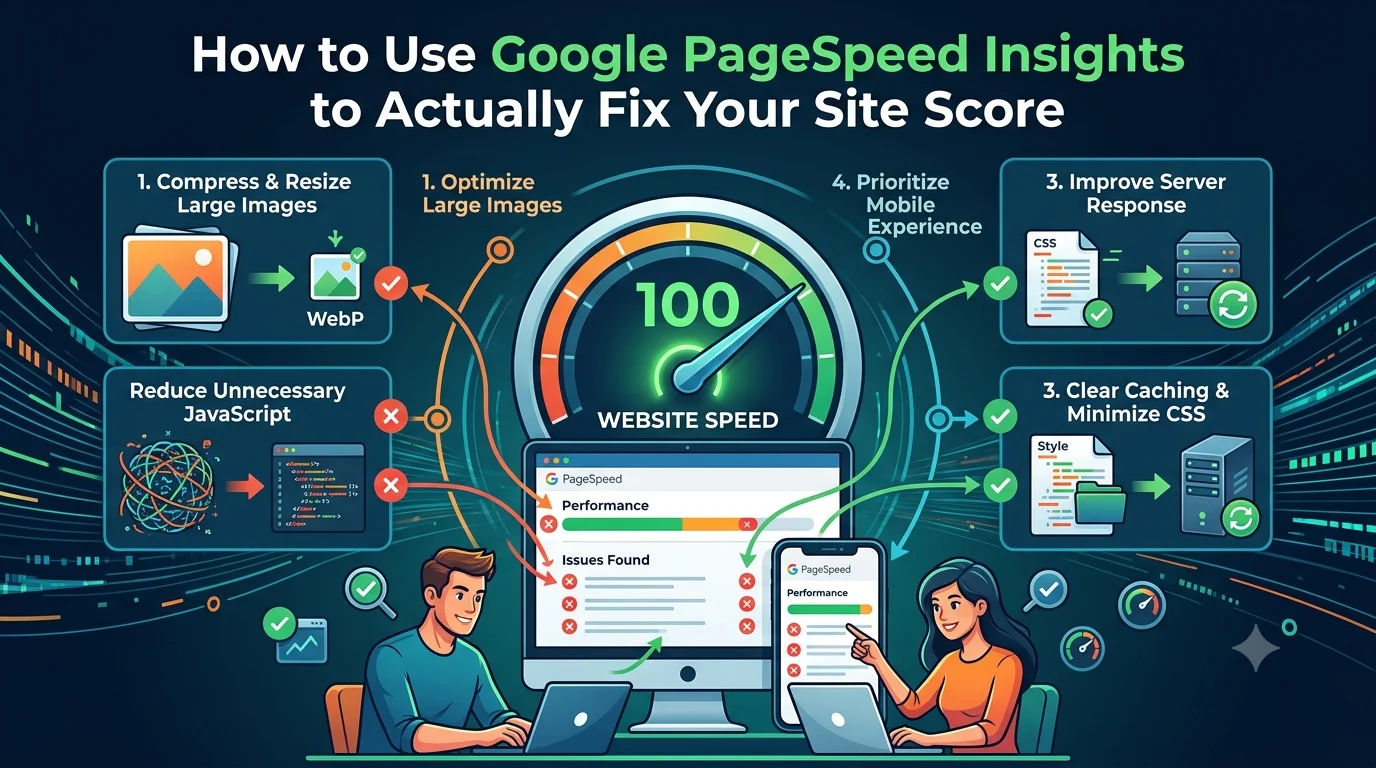
Page Speed: Google officially uses page loading speed as a ranking factor. A page that takes more than 3 seconds to load loses visitors — and rankings. Tools like Google PageSpeed Insights (free) will show you exactly where your site is slow and how to fix it.
Mobile-Friendliness: More than half of all searches happen on a phone. If your website looks broken or is hard to navigate on mobile, Google will rank it lower. Always check how your site looks on a small screen.
Site Structure: Google crawls your website by following links from page to page. A clean, logical structure — where every page can be found within a few clicks — helps Google index your content fully and helps users navigate without frustration.
Crawlability and Indexing: If Google can’t find your pages, they can’t rank. Make sure your important pages aren’t accidentally blocked and that you’ve submitted your sitemap to Google Search Console (also free).
The SEO Secret Nobody Talks About: Search Intent Is Everything
Here’s the part that separates beginners who struggle from the ones who start ranking quickly. Most people focus on what to write. The real question is why someone is searching for it.
There are four types of search intent:
Informational — The person wants to learn something. Example: “how does SEO work.” Write educational content. Answer the question clearly and completely.
Navigational — The person is looking for a specific brand or website. Example: “Brandsholder blog.” Make sure your brand name and website are clearly associated online.
Commercial — The person is comparing options before deciding. Example: “best SEO tools for beginners.” Write comparison content, reviews, or list-based articles.
Transactional — The person is ready to take action. Example: “hire SEO expert.” Make sure your service or product pages are optimized and your calls-to-action are clear.
When your content perfectly matches what the searcher actually wants to do, your rankings improve — not because you tricked Google, but because you genuinely gave people what they were looking for.
What Google Actually Measures in 2026
Google’s algorithm has evolved dramatically. It no longer just counts keywords on a page. In 2026, it pays close attention to signals that show whether real people found your content valuable.
Dwell Time: How long does someone stay on your page after clicking from search results? If they stay for 4 minutes, that’s a great signal. If they bounce in 10 seconds, that’s a red flag.
Click-Through Rate (CTR): Of all the people who see your page in search results, how many actually click? A compelling title and meta description improve your CTR — and Google notices.
E-E-A-T (Experience, Expertise, Authoritativeness, Trustworthiness): This is Google’s quality framework. It rewards content written by people with real knowledge and experience, published on websites that demonstrate credibility and transparency. As a beginner, you build E-E-A-T by writing honestly, citing real sources, publishing consistently, and avoiding misleading claims.
AI Overviews: Google now shows AI-generated summaries at the top of many search results. To get your content cited in these, write in clear, structured sentences. Use FAQ sections, numbered steps, and direct definitions. Think of it as writing for a very smart reader who wants the answer fast.
The Beginner SEO Checklist: Where to Actually Start
You don’t need to do everything at once. Start here:
Step 1 — Set up Google Search Console. It’s free. It shows you which keywords your site ranks for, which pages Google has indexed, and any errors that might be holding you back.
Step 2 — Do keyword research before you write anything. Use free tools like Google Keyword Planner or Ubersuggest. Look for keywords that have real monthly searches but aren’t dominated by massive websites. Long, specific phrases — called long-tail keywords — are where beginners win.
Step 3 — Write one genuinely helpful article. Pick one keyword. Answer the question better than any other page on that topic. Use clear headings. Keep paragraphs short. Don’t stuff keywords — use them naturally where they actually belong.
Step 4 — Fix your technical basics. Run your site through Google PageSpeed Insights. Check how it looks on a phone. Make sure your most important pages are linked from your homepage.
Step 5 — Be patient and stay consistent. SEO is not a switch you flip. Results typically begin showing in 3 to 6 months for competitive keywords. Some pages rank in weeks. The key is showing up regularly with quality content — not publishing once and waiting.
Common SEO Myths That Waste Beginners’ Time
Myth 1: “More keywords = better rankings.” Wrong. Keyword stuffing is penalized by Google. Use your keyword naturally, where it genuinely fits — not 40 times in 500 words.
Myth 2: “SEO is a one-time thing.” SEO requires ongoing effort. Outdated content loses rankings over time. Update your articles, refresh old statistics, and keep producing new content consistently.
Myth 3: “You need to be a tech expert.” You don’t. The fundamentals of on-page SEO are accessible to anyone. Start with content quality and intent-matching. The technical parts can be learned gradually.
Myth 4: “Paid ads help your organic rankings.” They don’t. Paying for Google Ads has zero effect on your organic SEO rankings. They are completely separate systems.
Conclusion:
The people who tell you “just do SEO” without explaining how it works aren’t being helpful. They’re repeating a buzzword. Now you know better.
SEO explained simply comes down to this: make your website easy for Google to understand, write content that genuinely helps real people, and build trust over time through consistency and quality. That’s how SEO really works — not through tricks, shortcuts, or gaming an algorithm, but through showing up for your audience in the moments they need you most.
If you’re just starting out, don’t try to do everything at once. Pick one keyword. Write one good article. Fix one technical issue. Then do it again next week. That’s how every expert started — and that’s how you will too.
For more beginner-friendly guides, honest marketing breakdowns, and strategies that actually work in 2026, visit brandsholder.com — where we keep things simple, practical, and always up to date.
Frequently Asked Questions About SEO
Q: What does SEO explained simply actually mean?
A: SEO is the process of making your website easy for Google to find and trust, so it shows your pages to people searching for topics you cover. At its core, it means writing helpful content, using the right keywords, and making sure your website works properly.
Q: How long does SEO take to work for beginners?
A: Most beginners start seeing early results within 3 to 6 months of consistent effort. Some low-competition keywords can rank within weeks. SEO compounds over time — the longer you stay consistent, the stronger your results become.
Q: Is SEO free?
A: The organic rankings SEO earns are free in the sense that you don’t pay Google per click. However, SEO requires time, effort, and sometimes investment in tools or professional help to do effectively.
Q: What is the most important part of SEO for beginners?
A: Search intent. Understanding why someone is searching — not just what they’re typing — is the single skill that will improve your rankings faster than anything else.
Q: What are the best free SEO tools for beginners?
A: Google Search Console, Google Analytics, Google PageSpeed Insights, and Ubersuggest are the four best free tools to start with. They cover keyword tracking, site health, speed, and traffic analysis.