Training an AI chatbot on your own business content means feeding it your internal knowledge so it can answer like your team. In 2026, businesses mostly use RAG, vector databases, and structured content systems instead of traditional fine-tuning. This method improves accuracy, reduces support load, and helps scale customer conversations faster.
AI chatbots have changed how businesses talk to customers. But in 2026, generic chatbots are no longer enough. Businesses now need smarter bots that understand their products, services, policies, and customer questions deeply.
That is why many companies want to train AI chatbot own content. Instead of giving general answers, these bots use company knowledge to provide accurate and useful responses. This makes support faster, sales smoother, and customer trust stronger.
If you want better automation, stronger conversions, and improved customer experience, this guide will show you exactly how to build a chatbot using your own business data.
What Does It Mean to Train an AI Chatbot on Your Own Content?
Training a chatbot on your own content means giving it access to your business knowledge. This can include FAQs, SOPs, blogs, product pages, PDFs, and customer support logs. The chatbot learns how your business communicates.
This process is not always “training” in the traditional machine learning sense. In many cases, it means connecting your content through retrieval systems. That makes responses smarter and more relevant.
Difference Between General AI and Custom AI Chatbots
General AI knows public information from the internet. It can answer broad questions but struggles with company-specific details. That creates gaps in customer support.
A custom AI chatbot business model fixes this issue. It works using your own knowledge base. That makes answers personalized and more accurate.
Why Businesses Need AI Bot Business Knowledge in 2026
Customer expectations are much higher now. People want instant answers that are correct. They do not want delays.
An AI bot business knowledge system helps solve that problem. It can answer product questions, pricing concerns, and support issues fast. This improves trust and saves time.
Why Training a Chatbot on Business Content Matters
Business data is valuable. It contains years of customer insights, product knowledge, and service details. Turning that into AI creates strong business automation.
A trained chatbot can become your 24/7 digital employee. It never sleeps and can handle hundreds of conversations together.
Improve Customer Support Accuracy
Wrong chatbot replies frustrate users quickly. That often happens when bots lack business-specific knowledge. Accuracy matters a lot.
When you connect your internal data, answers improve immediately. This lowers support tickets. It also improves customer satisfaction.
Automate Internal Knowledge Access
Many businesses also use chatbots for teams. Employees can ask questions about SOPs, HR rules, or workflows. This saves manual searching.
Internal knowledge automation is growing fast. It improves productivity. Teams get answers within seconds.
Increase Website Conversions
Website visitors often leave when confused. A chatbot can guide them in real time. That reduces drop-offs.
A chatbot on website 2026 setup can qualify leads, answer objections, and recommend products. That directly boosts conversions.
Preparing Your Business Content Before AI Training
Content quality decides chatbot quality. If your data is messy, the chatbot will perform poorly. Preparation is critical.
Start by collecting everything important. Then organize it clearly.
Organizing FAQs, PDFs, SOPs, and Website Pages
Your content should be grouped by category. Keep customer questions separate from technical docs. This improves retrieval.
Good sources include:
- Product pages
- Help center articles
- Pricing pages
- Internal SOPs
- PDF manuals
Cleaning and Structuring Content for Better AI Responses
Raw content often has duplicate or outdated information. Remove unnecessary sections. Keep content simple and direct.
Short, clear paragraphs work best. Structured content helps embeddings perform better.
Creating a Knowledge Base for AI Bot Business Knowledge
A knowledge base is where all your content lives. It acts as the brain of your chatbot. Good structure improves answer quality.
Think of it like a digital library. The better it is organized, the faster AI can retrieve answers.
How to Train AI Chatbot on Your Own Content
The process in 2026 is simpler than before. Tools have improved a lot. But the logic remains important.
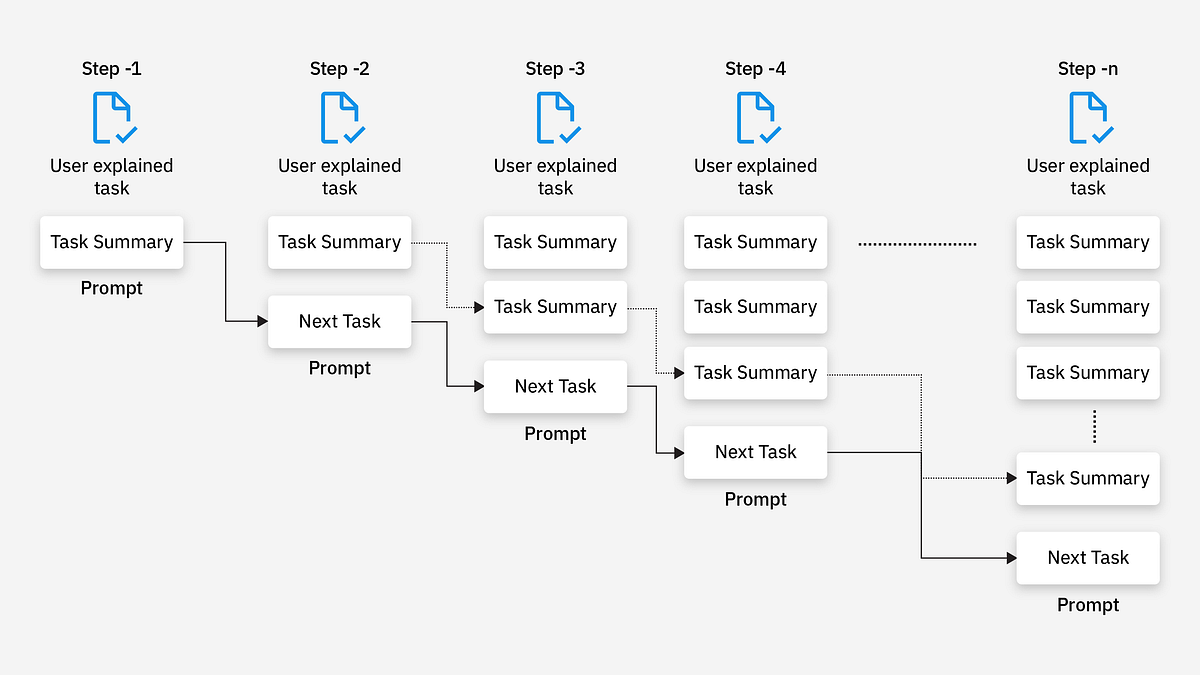
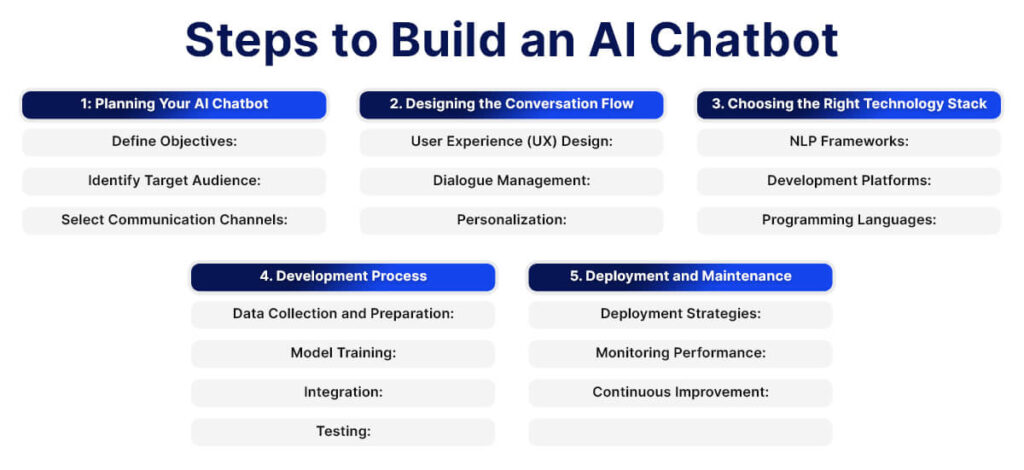
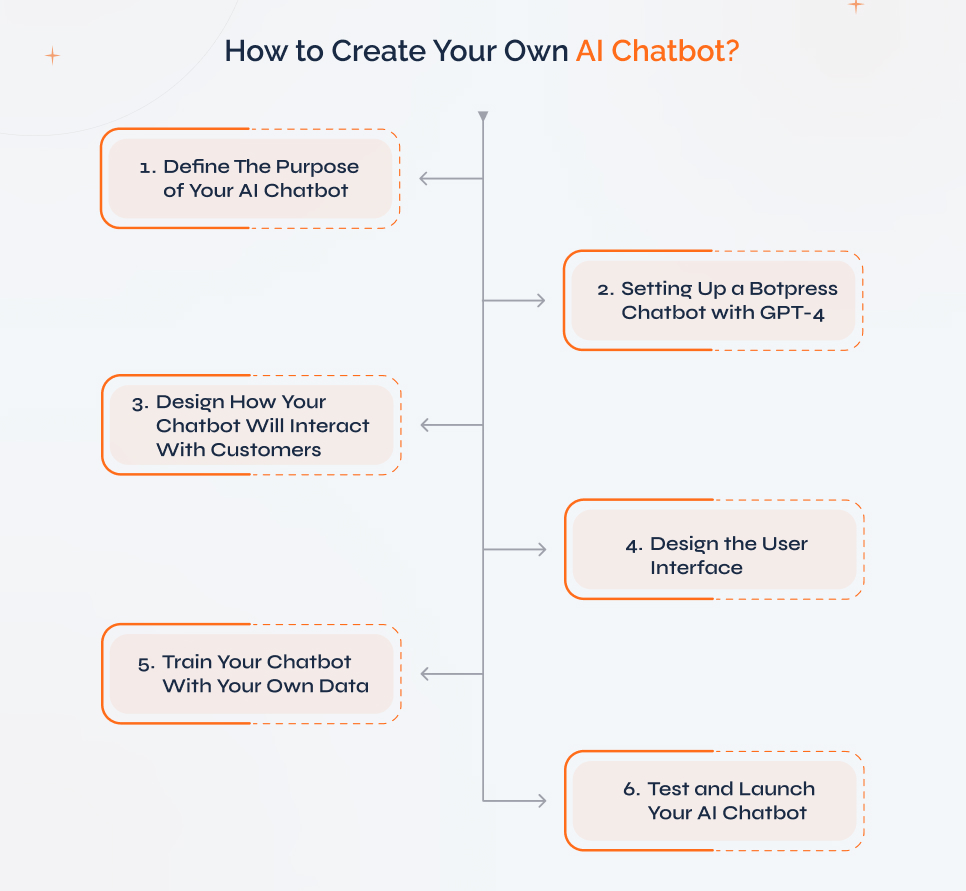
Here is the practical workflow.
Step 1 : Choose Your AI Model
First, choose the language model. Some businesses use OpenAI models because they are strong for business use. Others choose open-source models.
Your choice depends on budget, speed, and privacy needs.
Step 2 : Upload Business Content
Next, upload your content into your system. This can include PDFs, blogs, product docs, and FAQs. The more useful the data, the better.
Avoid adding weak or outdated material. Quality beats quantity.
Step 3 : Create Embeddings
Embeddings turn text into machine-readable vectors. This helps AI understand meaning, not just words. It improves semantic search.
This step powers modern AI chatbot training guide systems.
Step 4 : Connect Vector Database
Vector databases store embeddings for fast retrieval. Popular options include Pinecone and Weaviate.
This allows instant matching between user queries and your content.
Step 5 : Test Responses
Testing is where many businesses fail. You must check real customer scenarios. This improves trust.
Find weak responses. Then improve the content source.
Step 6 : Deploy on Website
Now embed the chatbot on your website. Most tools offer widgets for easy integration. Deployment takes minutes.
This is where business value starts showing.
Best Methods for AI Chatbot Training in 2026
Different businesses need different methods. There is no one-size-fits-all solution. Understanding the options matters.
Here is a simple comparison.
| Method | Best For | Cost | Accuracy |
|---|---|---|---|
| RAG | Fast updates | Medium | High |
| Fine-Tuning | Deep customization | High | Very High |
| Hybrid | Complex workflows | High | Highest |
Retrieval-Augmented Generation (RAG)
RAG is the most popular method today. It pulls answers from your content in real time. This keeps information fresh.
It is flexible and scalable.
Fine-Tuning Models
Fine-tuning changes the model itself. This makes it deeply aligned with your business. But updates are harder.
It works best for highly specialized industries.
Hybrid Training Models
Hybrid models combine both methods. This gives flexibility and stronger intelligence. Large businesses often use this.
It balances speed and accuracy.
Best Tools to Build a Custom AI Chatbot for Business
The market has many strong tools now. Choosing depends on your needs. Some are no-code, while others need developers.
Here are the top choices.
OpenAI APIs
OpenAI offers powerful APIs for chatbot building. They are flexible and scalable. Many startups use them. They are great for fast deployment.
LangChain
LangChain helps connect models, prompts, and databases. It is popular for advanced workflows. It gives developers more control.
Botpress
Botpress is strong for no-code chatbot creation. It is simple for beginners. Businesses can launch quickly.
Choosing the right tools matters more than ever in 2026. From AI chatbot builders to automation platforms, many of the best SEO tools now come bundled with AI features that help businesses improve both content quality and customer engagement at the same time.
Common Mistakes When Training AI on Business Content
Mistakes can reduce chatbot quality fast. Many businesses rush this stage. That creates poor user experiences.
Avoid these common problems.
Using Low-Quality Data
Bad content creates bad answers. Outdated documents confuse the AI. Keep everything fresh. Always audit content first.
Ignoring Content Updates
Businesses change often. Pricing, products, and policies evolve. Your AI must stay updated. Regular updates are necessary.
Poor Prompt Structure
Even good data needs good prompts. Weak prompts cause weak responses. Prompt engineering still matters. Clear instructions improve outputs.
No Human Testing
Never trust AI without testing. Real users ask unpredictable questions. Human review catches hidden gaps. Testing builds reliability.
How to Add Your AI Chatbot to Your Website in 2026
Website deployment is now easier than ever. Most platforms use simple code snippets. Setup is fast.
But optimization still matters.
Website Widget Integration
Widgets allow direct chatbot access. Visitors can ask questions instantly. This improves engagement.
Keep widget placement visible.
CRM and Live Chat Integration
Connecting CRM tools improves personalization. The bot can remember customer history. That creates better conversations.
This improves sales workflows.
Lead Capture Optimization
Your chatbot can collect emails, qualify leads, and book calls. This turns support into growth.
That makes AI more profitable.
Future of Custom AI Chatbots for Businesses
AI chatbots will become more advanced. Businesses will use multiple specialized bots together. This is already growing.
The future is smarter and faster.
Multi-Agent Systems
Instead of one bot, businesses will use many. Each bot handles a different task. This improves efficiency.
It is a big trend for 2026.
Real-Time Learning Models
Future bots will adapt faster. They will learn from interactions in real time. This improves response quality.
Continuous learning is the next step.
Voice + Chat Integration
Voice and text will merge more deeply. Customers will switch between them easily. This creates smoother support.
Omnichannel AI is becoming standard.
Key Takeaways
- Business-specific AI gives better answers than generic bots
- Content quality is the foundation of chatbot performance
- RAG is the most practical method in 2026
- Vector databases improve retrieval speed
- Website chatbots can directly increase conversions
- Continuous updates keep AI accurate
Conclusion
Training an AI chatbot on your own business content is no longer optional for modern companies. It is now one of the fastest ways to improve customer support, automate knowledge, and increase sales without growing your team. The businesses winning in 2026 are the ones building smarter systems around their own data.
If you want to stay ahead, start with clean content, use the right tools, and focus on continuous improvement. As platforms like Brandsholder continue discussing digital business growth, one thing is becoming clear: custom AI chatbots are now a serious business asset, not just a trend.
FAQs
1. Can I train an AI chatbot using PDFs?
Yes, PDFs are one of the most common data sources. They work well when structured properly.
2. What is better: RAG or fine-tuning?
RAG is better for frequent updates. Fine-tuning is better for deeper customization.
3. How much does it cost to build a custom chatbot?
Costs vary by tools and scale. Small setups can start under a few hundred dollars.
4. Can I add my chatbot to my website easily?
Yes, most platforms offer widgets or embed codes for fast deployment.
5. How often should I update chatbot content?
Update whenever your business information changes. Monthly reviews are a smart standard.