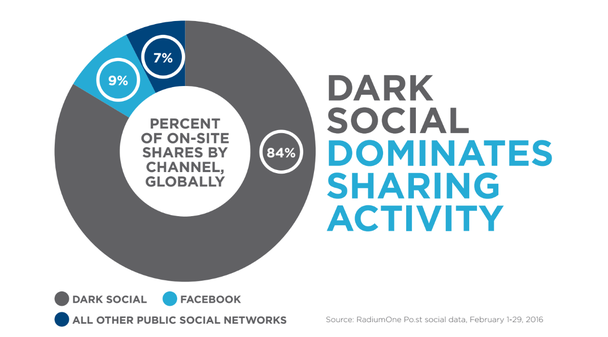
Dark social describes traffic created through private sharing channels. WhatsApp, email, DMs, SMS, and private communities are common examples. Analytics often categorizes this traffic as direct or unattributed. UTM parameters can improve campaign-level attribution. Customer surveys can uncover hidden referral sources. Shareable content should provide genuine value before promotion. Dark social should be measured through traffic and conversions. Perfect attribution is unrealistic because private conversations remain private.
Most marketers know where their website traffic comes from, but one important source often stays hidden. People regularly discover content through private conversations, group chats, messaging apps, email, and direct messages. These visits can appear as “direct traffic,” making their real source difficult to identify. A smart dark social marketing strategy helps businesses understand and influence this invisible sharing behavior.
What Is Dark Social?
Dark social refers to website visits generated through private sharing channels that analytics platforms cannot accurately attribute. Someone might send your article through WhatsApp, share a product in a private Facebook message, or forward a link through email. When the recipient clicks that link, the visit may appear as direct traffic instead of showing its true referral source.
Why Does Dark Social Matter?
Private sharing is often more meaningful than public engagement because people share content selectively. A recommendation from a trusted friend can influence a purchase more strongly than a random social media impression. Understanding this behavior helps marketers create content people naturally want to pass along.
Dark social can represent valuable traffic that standard attribution fails to explain. That hidden activity should not automatically be treated as untrackable or unimportant.
Common Dark Social Channels
Dark social can happen across many digital communication channels, including:
- WhatsApp and other messaging apps
- Facebook Messenger and Instagram direct messages
- Private online communities
- Email forwarding
- SMS and text messages
- Slack and workplace communication tools
- Private Discord or community groups
- Copy-and-paste link sharing
The important point is that these channels are private by design. Marketers cannot see the complete conversation, but they can measure some resulting behavior with better tracking.
How a Dark Social Marketing Strategy Works
A strong strategy focuses less on trying to expose private conversations and more on making sharing measurable. Your job is to create useful content, provide easy sharing options, and improve the signals available inside analytics platforms. This approach respects user privacy while giving marketers better attribution clues.
Create Content People Want to Privately Share
People rarely share ordinary promotional content in private conversations. They are more likely to send something that solves a problem, answers a question, saves money, or helps someone make a decision.
Think about content from the recipient’s perspective before publishing it. Guides, comparisons, checklists, original research, calculators, templates, and practical explanations often have strong private-sharing potential.
A useful question is simple: “Would someone send this to a friend?”
If the answer is yes, you have a stronger foundation for private sharing marketing.
Make Sharing Frictionless
Do not make users copy URLs manually when they want to share something. Add clear sharing buttons for WhatsApp, email, messaging platforms, and other relevant channels.
Your mobile experience deserves particular attention because private sharing frequently happens on smartphones. Fast-loading pages and obvious share controls can turn casual readers into active distributors.
How to Track Dark Social Traffic
You cannot see every private conversation that produces a visit, but you can improve attribution considerably. The best approach combines campaign tracking, analytics data, landing-page analysis, and user feedback.
Use UTM Parameters Strategically
UTM parameters can help distinguish traffic generated by specific campaigns and sharing placements. For example, a WhatsApp campaign can use a dedicated source and campaign name rather than relying on generic links.
This gives analytics tools more context about where tracked visitors originated. It also makes campaign reporting more useful when multiple channels are involved.
Analyze Direct Traffic Carefully
A sudden increase in direct traffic does not always mean users typed your URL manually. People may have copied links, received them through private messages, or opened them from applications that remove referral information.
Look for unusual patterns in landing pages, device types, geographic locations, and returning-user behavior. These signals can help identify traffic that may have been influenced by private sharing.
Ask Your Audience Directly
Sometimes the simplest tracking method is asking customers how they found you. Include a short survey question during signup, checkout, or another relevant conversion point.
Useful answers might include “friend sent it,” “WhatsApp,” “private group,” or “someone recommended you.” These responses can reveal influence that analytics alone cannot capture.
Dark Social vs Traditional Social Media
Public social media and private sharing work differently, so they should not be measured in exactly the same way. Public platforms provide visible likes, comments, shares, and referral information, while private channels provide fewer observable signals.
| Factor | Public Social | Dark Social |
|---|---|---|
| Sharing environment | Public | Private |
| Attribution | Usually clearer | Often incomplete |
| Main behavior | Likes, comments, public shares | Messages, forwards, private recommendations |
| Trust level | Variable | Often higher |
| Measurement | Platform analytics | Analytics, UTMs, surveys, behavior |
| Content opportunity | Broad reach | Personal relevance |
The two channels can complement each other rather than compete. Public content can create awareness, while private recommendations can move people closer to conversion.
Build a WhatsApp Marketing Strategy Around Sharing
WhatsApp can be an important part of a private-sharing strategy, particularly for businesses with audiences that already communicate through messaging. Instead of sending constant promotional messages, focus on useful resources, timely offers, exclusive information, and content worth forwarding.
Give People a Reason to Share
A message becomes more shareable when it provides immediate value to the person receiving it. Discounts, helpful guides, event information, product comparisons, and practical tips can all encourage forwarding.
Avoid treating every WhatsApp interaction as a sales opportunity. The strongest private-sharing campaigns feel useful before they feel promotional.
Use Trackable Links
Create campaign-specific links whenever possible and connect them with your analytics platform. This allows you to distinguish measurable messaging traffic from broader direct traffic.
Remember that tracking will never provide complete visibility into private conversations. The goal is better measurement, not perfect surveillance.
Measure What Dark Social Influences
Traffic volume is only one part of the picture. A visitor coming from a private recommendation may behave differently from someone arriving through a broad advertising campaign.
Track Conversions and Assisted Results
Monitor signups, purchases, downloads, returning visits, and other meaningful actions. If private-sharing traffic consistently produces valuable users, it deserves a stronger place in your marketing plan.
You should also examine assisted conversions where your analytics setup supports them. Someone may discover your brand through a private message and convert later through search or another channel.
Build a Dark Social Reporting Framework
Create a simple reporting system that combines measurable and qualitative signals. Review direct traffic trends alongside UTM campaigns, customer surveys, referral codes, and conversion data.
| Metric | What It Can Tell You |
| Direct traffic | Possible hidden sharing and other untracked sources |
| WhatsApp campaign visits | Measurable messaging performance |
| Referral responses | How people discovered your brand |
| Assisted conversions | Hidden influence before conversion |
| Share clicks | Content-sharing interest |
| Returning visitors | Potential recommendation quality |
This approach gives you a more realistic picture of how people discover and recommend your business.
Key Takeaway: Make Invisible Sharing More Measurable
Dark social is not a technical problem that marketers can completely eliminate. It is a natural result of people communicating privately across modern digital channels.
The better approach is to create content worth sharing, make sharing easy, use appropriate tracking, and study customer behavior. Over time, these signals can reveal how private recommendations contribute to awareness, traffic, trust, and conversions.
EEAT and Google Search Core Update Considerations
A trustworthy strategy should be based on genuine audience needs rather than exaggerated attribution claims. Explain your tracking methods clearly, respect privacy, and use first-hand business data whenever available.
For Google-focused content, prioritize helpful information, original insights, clear explanations, and a strong user experience. SEO should support the reader rather than turning the article into a collection of repeated keywords.
Conclusion
Dark social represents the part of digital word-of-mouth that traditional analytics often struggles to explain. Businesses can respond by improving shareability, tracking measurable campaigns, collecting customer feedback, and studying conversion behavior rather than chasing perfect attribution.
For brands investing in modern SEO and digital growth, this approach creates a more complete understanding of the customer journey. Brandsholder can use these principles to build content and marketing experiences that encourage genuine sharing while keeping measurement practical, transparent, and user-focused.
Frequently Asked Questions
1. What is dark social in marketing?
Dark social is traffic generated when people privately share links through messaging apps, email, direct messages, or private communities. Analytics platforms may not identify the original referral source accurately.
2. Can dark social traffic be tracked?
It can be partially tracked, but not completely. UTM parameters, campaign-specific links, referral surveys, analytics patterns, and conversion data can provide useful attribution signals.
3. Why is WhatsApp important for private sharing?
WhatsApp allows people to recommend content, products, and offers directly to friends or groups. Its private nature makes it valuable for relationship-driven marketing and word-of-mouth referrals.
4. How can I increase dark social sharing?
Create useful content that people naturally want to send to others. Add simple sharing buttons, provide practical resources, and make your pages fast and mobile-friendly.
5. Is dark social more valuable than public social media?
Not necessarily, because both channels serve different purposes. Public social media can generate broad awareness, while private sharing can create highly trusted recommendations and meaningful referral traffic.