Social listening tools 2026 help businesses understand what customers, competitors, creators, and communities are saying online. They can track brand mentions, analyze sentiment, identify trends, monitor competitors, and provide alerts about important conversations. The best approach combines focused keyword tracking, relevant platform coverage, AI-powered analysis, and human judgment. For businesses, the real benefit is turning online conversations into better content, products, customer experiences, and reputation management.
People talk about brands every day across social networks, forums, review sites, and online communities. The challenge is finding those conversations before they become missed opportunities or reputation problems. Social listening tools 2026 help businesses discover mentions, understand customer sentiment, monitor competitors, and spot emerging trends. Instead of guessing what audiences think, brands can use real conversations to make smarter marketing and customer experience decisions.
What Are Social Listening Tools in 2026?
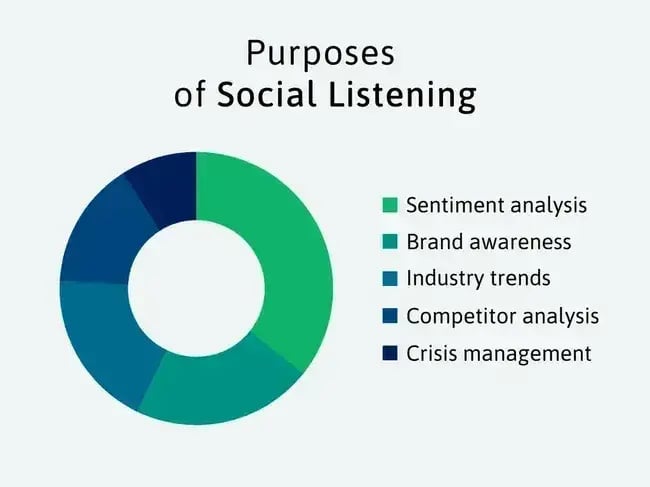
Social listening tools collect and analyze conversations about brands, products, topics, and competitors. Unlike basic social media monitoring, they help explain why people are talking and what those conversations mean. Modern platforms increasingly use artificial intelligence to identify sentiment, themes, unusual activity, and important trends.
Social Listening vs. Social Media Monitoring
Social media monitoring mainly focuses on finding and responding to mentions, comments, and messages. Social listening goes further by analyzing patterns across many conversations and sources. This distinction matters because a single complaint may seem small, while hundreds of similar comments reveal a larger customer problem.
How Social Listening Tools Track Brand Mentions
A listening platform can monitor brand names, product names, hashtags, campaign phrases, and common spelling variations. It can also follow competitor names and industry terms to reveal conversations your business may not see directly. Good tracking depends on carefully chosen keywords because irrelevant results can quickly create unnecessary noise.
Why Brand Monitoring Social Media Matters in 2026
Online conversations can influence buying decisions, reputation, customer loyalty, and brand perception. Brand monitoring social media gives companies a clearer view of what audiences are saying without requiring employees to search manually. It also helps teams respond to important conversations while they are still relevant.

Find Customer Feedback Faster
Customers often share honest opinions online because it feels easier than contacting customer support. Their comments can reveal product problems, confusing features, service issues, and ideas for improvement. Monitoring these discussions gives businesses a valuable source of unfiltered customer feedback.
Protect Brand Reputation
A sudden increase in negative conversations can signal a developing reputation issue. Listening platforms can help teams detect unusual activity and investigate the cause before the problem spreads further. However, automated alerts should support human judgment rather than replace it completely.
Discover Trends Before Competitors
Social conversations often reveal changing interests before they become obvious through traditional research. Teams can identify popular topics, repeated questions, emerging needs, and shifts in audience language. These insights can guide content, campaigns, product development, and customer experience strategies.
What Can You Track With Social Listening Tools?
A good platform can monitor much more than direct brand mentions. Depending on the software, businesses can analyze social networks, forums, blogs, reviews, news sources, and online communities. This broader coverage creates a more complete picture of brand visibility and audience perception.
| What to Track | Why It Matters |
|---|---|
| Brand mentions | Measures how often people discuss your business |
| Product mentions | Reveals opinions and customer experiences |
| Sentiment | Shows whether conversations are positive or negative |
| Competitors | Helps compare visibility and audience reactions |
| Keywords | Finds conversations connected to your industry |
| Hashtags | Tracks campaigns and emerging discussions |
| Share of voice | Measures your visibility against competitors |
| Trends | Identifies growing interests and opportunities |
Brand and Product Mentions
Tracking brand mentions helps businesses understand where conversations are happening. Product-level monitoring can reveal specific features customers love, dislike, or want changed. It is especially useful when people discuss products without directly tagging the official brand account.
Customer Sentiment
Sentiment analysis categorizes conversations as positive, negative, or neutral. Advanced systems can also identify emotional patterns and changes in audience attitudes over time. Human review remains important because sarcasm, slang, jokes, and context can confuse automated systems.
Competitor Conversations
Competitor monitoring shows how audiences react to rival products, campaigns, pricing, and customer service. Comparing these conversations can reveal gaps that your business could address. It can also highlight successful strategies worth studying without simply copying competitors.
Best Social Listening Tools in 2026
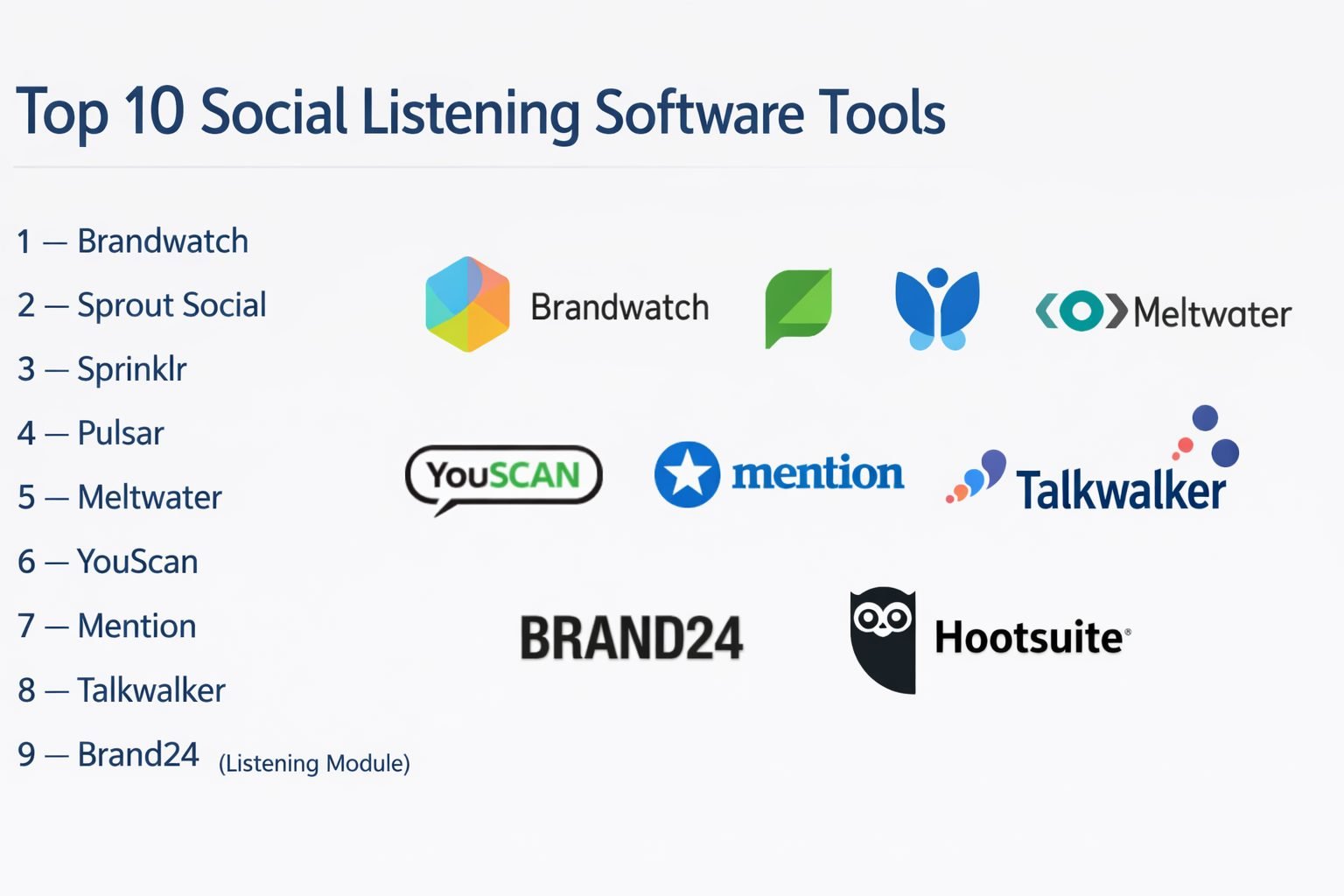
The best social listening tool depends on your goals, budget, audience size, and required data coverage. Enterprise companies may need advanced consumer intelligence, while smaller teams often prioritize affordability and simple alerts. A useful comparison should therefore focus on the job each platform performs rather than choosing one universal winner.
| Tool | Best For | Key Strength |
| Brandwatch | Enterprise brands | Consumer intelligence |
| Hootsuite | Social teams | Management and listening |
| Brand24 | Brand monitoring | Mention tracking |
| Sprout Social | Marketing teams | Listening and analytics |
| Meltwater | PR teams | Media and social monitoring |
| Talkwalker | Large organizations | Advanced intelligence |
| Mention | Smaller businesses | Simple monitoring |
Best Tool for Small Businesses
Smaller companies usually need straightforward monitoring without an overwhelming setup process. Look for affordable plans, easy dashboards, mention alerts, useful filters, and clear reporting. A simpler platform can be more valuable than an expensive system packed with features your team rarely uses.
Best Tool for Enterprise Brands
Large organizations often require broader data coverage, historical information, advanced reporting, multiple users, and integrations. Enterprise platforms can connect social insights with PR, marketing, customer experience, and competitive intelligence. Scalability should be a major consideration when selecting software for a large organization.
How to Set Up Brand Monitoring Social Media
Setting up monitoring correctly is more important than simply choosing popular software. Start with the conversations that matter most to your business and gradually expand your listening queries. This approach reduces irrelevant results and makes your reports easier to understand.
Step 1: Create Your Monitoring Keywords
Start with your brand name, product names, executive names, campaign names, hashtags, and common misspellings. Add competitor names and important industry phrases when competitive intelligence matters. Review your results regularly and remove keywords that consistently generate irrelevant conversations.
Step 2: Choose Relevant Platforms
Not every audience spends time on the same networks or communities. Identify where your customers actually discuss products, ask questions, leave reviews, and share experiences. Monitoring the right sources is more useful than collecting huge amounts of irrelevant data.
Step 3: Set Alerts and Filters
Create alerts for important mentions, sudden sentiment changes, competitor activity, and potential reputation issues. Filters for language, location, source, sentiment, and relevance can make large datasets easier to manage. Real-time notifications are particularly useful when your team needs to respond quickly.
Step 4: Review Conversations Regularly
Listening only becomes valuable when someone interprets the information. Set a regular review process so marketing, customer service, and product teams can discuss meaningful findings. Document recurring themes and turn them into specific actions whenever possible.
How to Turn Social Listening Data Into Action
Collecting thousands of conversations does not automatically improve a business. The real value comes from connecting audience insights with decisions across marketing, customer service, product development, and reputation management. This is where a strong social listening strategy becomes more than another analytics dashboard.
Improve Content Strategy
Look for recurring questions, customer language, frustrations, and popular topics. These findings can inspire articles, videos, social posts, FAQs, and campaigns that address real audience interests. Using customers’ natural language can also make content feel more relevant and easier to understand.
Improve Products and Customer Experience
Repeated complaints can reveal problems that traditional surveys may overlook. Product teams can use those patterns to prioritize improvements, while customer service teams can address recurring concerns. Listening therefore creates a feedback loop between customers and internal teams.
Strengthen Crisis Response
Unusual spikes in mentions or negative sentiment deserve immediate investigation. A sudden increase could come from a viral complaint, news story, product problem, or unrelated event. Early detection gives teams more time to verify facts and choose an appropriate response.
Find Influencers and Advocates
Listening can uncover customers, creators, experts, and community members already discussing your brand. These people may become valuable advocates when their interests genuinely align with your products. Authentic relationships usually work better than treating every influential account as a promotional opportunity.
What Features Should the Best Social Listening Tool Have?
Before buying software, create a checklist based on your actual monitoring needs. Strong platforms should make data easier to understand rather than simply producing more dashboards. Prioritize features that help your team discover meaningful conversations and act on them.
Real-Time Monitoring and Alerts
Real-time alerts help teams identify important conversations quickly. This is particularly useful for reputation management, customer complaints, product launches, and crisis situations. Make sure alerts can be customized so your team does not become overwhelmed by notifications.
AI-Powered Insights and Sentiment Analysis
AI can summarize conversations, identify themes, classify sentiment, and highlight unusual changes. These capabilities save time when teams need to analyze large volumes of information. Still, important decisions should include human review because automated analysis can misunderstand context.
Competitor and Share-of-Voice Tracking
Competitive insights show how frequently your brand appears compared with rival businesses. Share of voice can help measure visibility while sentiment reveals the quality of those conversations. Together, these metrics provide a more useful picture than mention volume alone.
Social Listening Metrics to Track
Focus on metrics that connect directly to business objectives. Mention volume is useful, but it should not become the only measure of success. Combining visibility, sentiment, engagement, and response data creates a stronger performance picture.
| Metric | What It Shows |
| Mention volume | Conversation frequency |
| Sentiment | Audience perception |
| Share of voice | Competitive visibility |
| Engagement | Conversation activity |
| Reach | Potential audience exposure |
| Response time | Speed of customer response |
| Sentiment change | Reputation movement |
| Topic trends | Emerging interests |
Common Social Listening Mistakes to Avoid
Many businesses struggle because they collect information without establishing a clear process for using it. Others monitor too many keywords and end up drowning in irrelevant results. A focused strategy produces cleaner insights and better decisions.
Tracking Too Many Keywords
Adding every possible keyword can create unnecessary noise. Start with terms directly connected to your brand, products, competitors, and audience. Expand the list only when new monitoring needs appear.
Relying Completely on AI Sentiment
Automated sentiment analysis is helpful, but it is not perfect. Sarcasm, cultural references, slang, and mixed opinions can produce inaccurate classifications. Important reputation or crisis decisions should always include human interpretation.
Collecting Data Without Taking Action
A dashboard cannot solve a customer problem by itself. Assign responsibility for reviewing insights and deciding what should happen next. The strongest listening programs turn recurring conversations into measurable changes.
Social Listening Tools 2026: What Has Changed?
The biggest change is the movement from simple mention collection toward intelligent analysis. AI can now help teams identify themes, summarize conversations, recognize unusual activity, and surface potentially important insights. At the same time, monitoring is expanding beyond traditional social networks into broader online communities.
AI Is Moving From Alerts to Insights
Earlier monitoring systems often focused on sending notifications when specific keywords appeared. Modern platforms increasingly help explain what those conversations mean and why a change may matter. This reduces manual analysis and gives teams more time to act on important findings.
Social Listening Is Expanding Beyond Social Networks
Customers discuss brands across Reddit, review platforms, forums, blogs, news websites, and other communities. A broader monitoring strategy can therefore reveal conversations that traditional social dashboards miss. This makes online brand monitoring increasingly important for reputation and competitive research.
Key Takeaways
- Track brand, product, competitor, and industry conversations.
- Use sentiment as context rather than an absolute truth.
- Choose tools according to your team’s actual requirements.
- Create focused monitoring queries to reduce irrelevant results.
- Review conversations regularly and assign clear ownership.
- Turn recurring insights into marketing and customer improvements.
- Combine AI analysis with human judgment for important decisions.
Conclusion
Social listening is no longer just about counting how often a brand appears online. It is about understanding conversations, identifying meaningful changes, and responding with useful business decisions. The right platform can help teams monitor reputation, discover customer needs, analyze competitors, and identify trends before they become obvious. For brandsholder teams that want stronger visibility and smarter decisions, building a focused listening strategy can turn everyday online conversations into a valuable source of competitive insight.
Frequently Asked Questions
What are social listening tools?
They are platforms that monitor online conversations about brands, products, topics, and competitors. They organize mentions and can analyze sentiment, trends, engagement, and audience discussions. Their purpose is to turn scattered conversations into useful business insights.
What is the best social listening tool in 2026?
There is no single option that works best for every business. Brandwatch and similar enterprise platforms suit organizations needing deep intelligence, while simpler platforms can work better for smaller teams. Compare data coverage, alerts, analytics, integrations, usability, and pricing before choosing.
How can I track brand mentions on social media?
Create monitoring queries using your brand name, product names, campaign terms, hashtags, and common spelling variations. Then select relevant platforms and configure alerts for important conversations. Review results regularly to separate meaningful discussions from irrelevant mentions.
What is the difference between social listening and social monitoring?
Social monitoring mainly identifies and helps manage individual mentions or interactions. Social listening analyzes larger conversation patterns to understand sentiment, trends, customer needs, and competitive changes. In simple terms, monitoring tells you what happened, while listening helps explain what it means.
Are social listening tools worth it for small businesses?
They can be valuable when a business receives enough online conversations to generate useful insights. Small companies should prioritize affordable platforms with simple dashboards, relevant data coverage, and practical alerts. The goal is not collecting the most data but finding information that improves decisions.