Google’s search quality evaluation framework helps measure content quality through four distinct layers: experience, expertise, authority, and trust. In today’s highly competitive search landscape, the most critical google eeat signals include first-hand knowledge, verifiable expert authorship, high-intent backlink footprints, and absolute transparency in website policies. Content creators must systematically deploy a structured eeat seo checklist both before and after hitting the publish button. Proactively working to improve eeat score metrics not only strengthens your search visibility but also acts as a powerful shield that protects your organic traffic during volatile Google core updates. Ultimately, prioritizing these core quality signals serves as your long-term ranking insurance policy.
Google’s ranking algorithms keep getting smarter and more intuitive every single year. In 2026, implementing a comprehensive eeat checklist 2026 has transitioned from an advanced optimization strategy to an absolute necessity for evaluating digital content. If your landing pages or articles lack clear indicators of trust, specialized expertise, or real-world experience, climbing to the top of search engine results pages (SERPs) becomes an uphill battle. This actionable guide breaks down the exact quality signals that modern search systems analyze to determine your site’s true credibility.

What Is E-E-A-T and Why It Matters in 2026
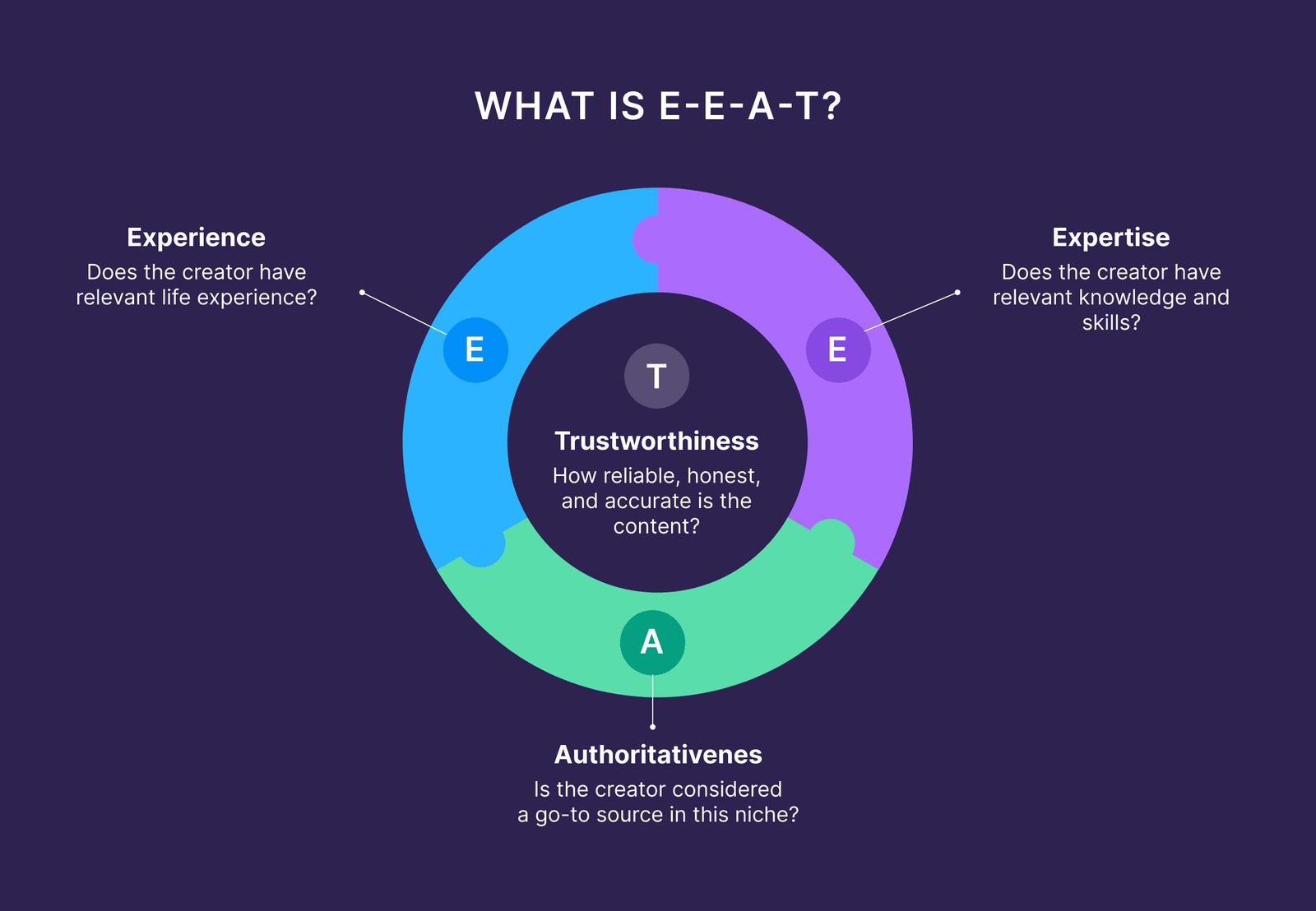
The acronym E-E-A-T stands explicitly for experience expertise authority trust. Originally born out of Google’s Search Quality Rater Guidelines, this multi-dimensional concept directly shapes how the core automated systems evaluate the helpfulness of information. While it is crucial to understand that E-E-A-T is not a single, direct technical ranking factor like page speed, it heavily influences how human-centric algorithms assess whether a piece of content genuinely satisfies user intent. Building a website with a robust foundation in these areas is often the ultimate differentiator that separates sustained, top-tier rankings from average, declining organic performance.
Understanding Experience, Expertise, Authority, and Trust
-
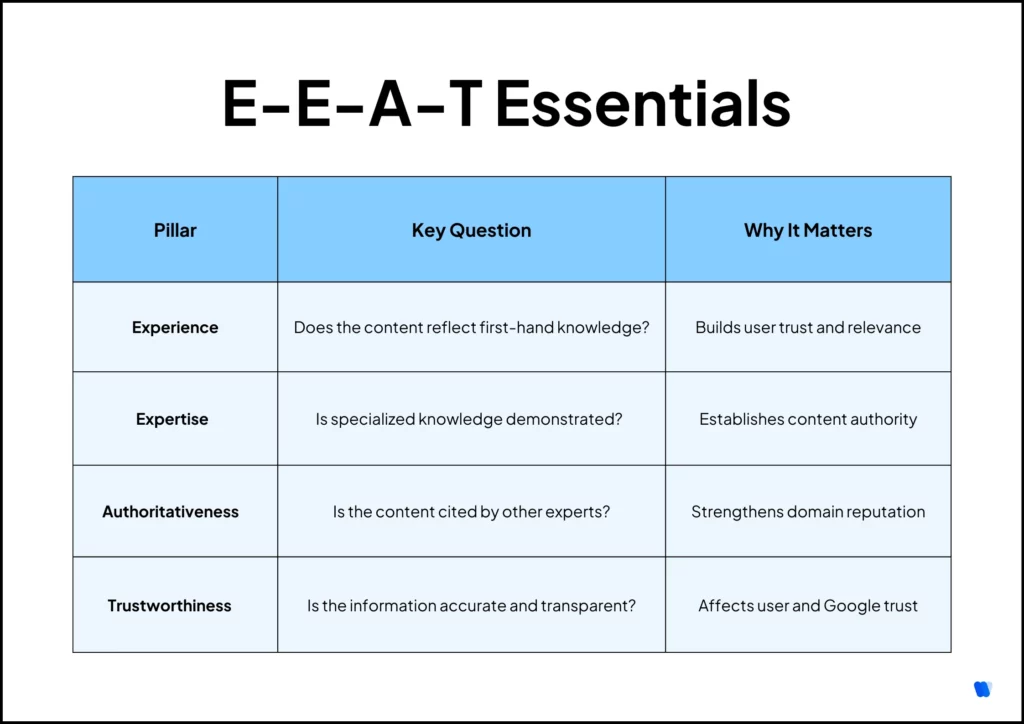
Experience: This reflects the creator’s direct, first-hand engagement or lived interaction with the topic at hand.
-
Expertise: This highlights the formal credentials, depth of knowledge, and absolute factual accuracy presented in the text.
-
Authority: This is established over time through online reputation, editorial mentions, brand citations, and high-quality references.
-
Trust: This is the critical baseline layer that makes the rest of your content believable and dependable for the end-user.
Key Takeaway: Trust remains the single most important component of the entire framework because an untrustworthy site cannot leverage its supposed expertise to rank safely.
How Google Evaluates EEAT Signals
Modern search engines analyze a sophisticated matrix of on-page and off-page data points to verify content quality before assigning high-ranking positions. These automated checks look at the holistic health of a website to measure its true credibility, scientific accuracy, and practical utility. Search engines are highly optimized to deliver safe, reliable answers for every search query, which explains why massive algorithm adjustments routinely reward web properties that exhibit exceptional transparency and user-first dedication.
Is EEAT a Ranking Factor?
Technically, it is accurate to state that E-E-A-T is not an isolated ranking score or an individual algorithmic signal. Instead, Google’s systems look at an aggregate collection of tangible elements that naturally correlate with these four quality pillars. This includes evaluating natural backlink acquisition patterns, public author reputations across the web, and the substantive depth of the content ecosystem, indirectly making it a cornerstone of modern SEO success.
How Quality Raters Influence Search Algorithms
Thousands of trained Search Quality Raters systematically evaluate search results globally to test the real-world efficiency of algorithm updates. While their manual ratings do not directly change an individual website’s position, their collective feedback is used to train machine learning models and refine automated search systems. They specifically look for clear indicators of factual accuracy, verifying that content aligns with what real humans consider helpful and safe.
The Complete EEAT Checklist 2026
This exhaustive eeat seo checklist covers 27 distinct operational signals designed to upgrade your digital footprint. By systematically checking off each item, you build a resilient content structure that fulfills advanced quality benchmarks. Missing even a handful of these core indicators can noticeably weaken your overall site trust.
Experience Signals (1–7)
Experience is now more important than ever. Google wants proof of real-world knowledge. Generic writing often fails here. Unique experiences win attention.
- Original case studies
- Real screenshots
- Personal examples
- Product testing
- First-hand lessons
- Updated findings
- Real client results
Content with lived experience feels authentic.
Expertise Signals (8–13)
Establishing deep expertise signals to search engines that your material is factually sound and deeply researched. This is an absolute mandatory requirement for websites operating in Your Money or Your Life (YMYL) niches.
- Author credentials
- Deep topic coverage
- Accurate facts
- Research-backed claims
- Industry language
- Structured explanations
Experts write with confidence and clarity.
Authority Signals (14–20)
True brand authority is an organic byproduct of consistent industry recognition. As other trusted voices cite your brand, search engines begin to validate your ecosystem as an industry-standard benchmark.
- High-quality backlinks
- Brand mentions
- Industry citations
- Media references
- Author recognition
- Topic clusters
- Entity relevance
Authority compounds like SEO equity.
Trust Signals (21–27)
Site-level trustworthiness is the exact area where the vast majority of struggling websites fail to meet expectations. Online users and automated crawlers need explicit, undeniable proof that your digital business is legitimate and transparent.
| Trust Signal | Why It Matters |
|---|---|
| HTTPS | Secures user data |
| Contact Page | Shows business legitimacy |
| Privacy Policy | Builds compliance trust |
| About Page | Improves transparency |
| Editorial Policy | Shows publishing standards |
| Updated Dates | Confirms freshness |
| Disclosure Pages | Prevents misleading content |
Trust makes content safer to rank.
EEAT SEO Checklist for Content Creators
Smart publishers require a repeatable, standardized workflow to execute quality controls seamlessly. Utilizing a strict operational checklist significantly minimizes systemic ranking risks and ensures structural continuity across your entire blog. If you want to dive deeper into maximizing your search footprint, review our complete optimization guide via the official Brandsholder homepage.
Pre-Publishing Checklist
Before pushing any new article live to the web, verify that you have successfully satisfied these initial quality gates:
-
Is the author’s name clearly visible with a direct link to their complete professional bio page?
-
Are all external statistics, data points, and factual claims explicitly cited with high-quality links?
-
Does the introductory section contain an original thesis statement or a unique, non-generic angle?
-
Is the heading structure optimized to comprehensively cover the search intent of the user?
Post-Publishing Checklist
Once your content is indexed, your primary focus must shift toward scaling its external validation and keeping its core details immaculate. To streamline your structural roadmap, you can analyze our historical data index inside the global sitemap file to build internal topic clusters.
-
Promote the piece to industry professionals to secure natural mentions and editorial backlinks.
-
Monitor user engagement metrics closely to identify and fix areas with high bounce rates.
-
Schedule routine content audits to refresh outdated statistics and replace broken links.
- Running regular audits is much easier with the right stack, explore our roundup of free SEO tools to track rankings, fix technical issues, and monitor backlink health without overspending
-
Ensure that site-wide trust pages remain accurate and fully functional across all devices.
How to Improve Your EEAT Score Faster
If your website has suffered from an algorithm adjustment, you can actively implement strategic optimizations to change your digital trajectory. The most immediate, needle-moving victories are almost always achieved by fixing obvious site transparency gaps and leaning heavily into real-world experience signals. For further scientific insights into how search algorithms evaluate structural credibility signals, you can read the latest whitepapers hosted on the Google Search Central blog.
Content-Level Improvements
Make your content deeper and more practical. Add personal insights and examples. Include expert quotes when relevant. Improve factual accuracy.
Better content improves user trust.
Site-Level Improvements
Fix your About page, Contact page, and policies. Add author pages with credentials. Improve website design and usability. Secure your site fully.
Site trust impacts SEO heavily.
Off-Page Authority Building
Earn mentions from trusted websites. Build relationships for natural backlinks. Strengthen your brand online. Authority grows outside your own website too.
Off-page signals matter greatly.
Common EEAT Mistakes That Hurt Rankings
Many SEO practitioners mistakenly believe that optimizing for quality metrics simply means slapping a brief author bio box at the bottom of an article. In reality, modern search engines analyze your entire digital ecosystem, meaning that a major flaw in one section can easily downgrade the performance of your top pages.
Fake Expertise Signals
Inventing fabricated credentials or using stock photos for author personas is a massive risk that frequently ends in permanent indexing issues. Modern automated systems are incredibly proficient at verifying identity consistency across the web, making authentic presentation the only viable path forward.
Thin AI Content
Utilizing artificial intelligence tools to accelerate your output is not a negative practice by default. However, publishing unedited, thin AI content that lacks unique viewpoints, data-backed findings, or real-world experience signals inevitably leads to zero impressions over time, as it fails to satisfy basic human helpfulness standards.
Weak Author Identity
Publishing purely anonymous articles or hiding behind generic corporate bylines creates an immediate trust gap for the reader. Online consumers want to know exactly who is giving them advice, making transparent author attribution an indispensable component of successful modern publishing.
Final Thoughts on EEAT in 2026
Thoroughly executing a modern eeat checklist 2026 is no longer a luxury choice for digital brands—it is the foundational cornerstone of sustainable organic growth. Websites that deliberately invest the time to build undeniable trust, technical expertise, authentic authority, and lived experience will consistently maintain stable keyword positions through aggressive core updates. At Brandsholder, we believe that embedding these foundational quality principles directly into your long-term content strategy is the single most effective way to unlock compound organic growth and dominate competitive SERPs.
FAQs
Is EEAT a direct Google ranking factor?
No, EEAT is not direct. But it influences many ranking signals.
How can I improve my EEAT score?
Improve author credibility, trust pages, content depth, and backlinks.
Does AI-generated content hurt EEAT?
Only low-quality AI content hurts. Helpful AI content can still rank.
What are Google EEAT signals?
They are content quality indicators like expertise, trust, and authority.
Why is trust the most important part of EEAT?
Without trust, expertise and authority lose value in rankings.