A successful SEO content brief is the foundation of high-performing content. It aligns writers with user intent, keyword strategy, content goals, and editorial expectations before the writing process begins. Modern briefs should focus on semantic SEO, EEAT, topical authority, and AI search optimization instead of keyword repetition. By using a structured template, businesses can publish consistent, helpful, and search-friendly articles that perform well across Google Search and AI-driven search experiences
Creating SEO content that ranks well starts long before the writing process begins. A well-structured content brief gives writers clear direction, aligns articles with search intent, and reduces unnecessary revisions. If you are looking for the best content brief template SEO professionals rely on, this guide explains every essential element in a simple and practical way. You’ll also learn how to write effective briefs that support Google Search, AI-powered search experiences, and modern content marketing strategies.
What Is a Content Brief Template SEO Professionals Use?
An SEO content brief is a document that provides writers with everything they need before creating an article. It includes keywords, audience information, search intent, recommended structure, and optimization guidelines. A detailed brief keeps everyone on the same page and ensures the final content matches business goals as well as user expectations.
Definition of an SEO Content Brief
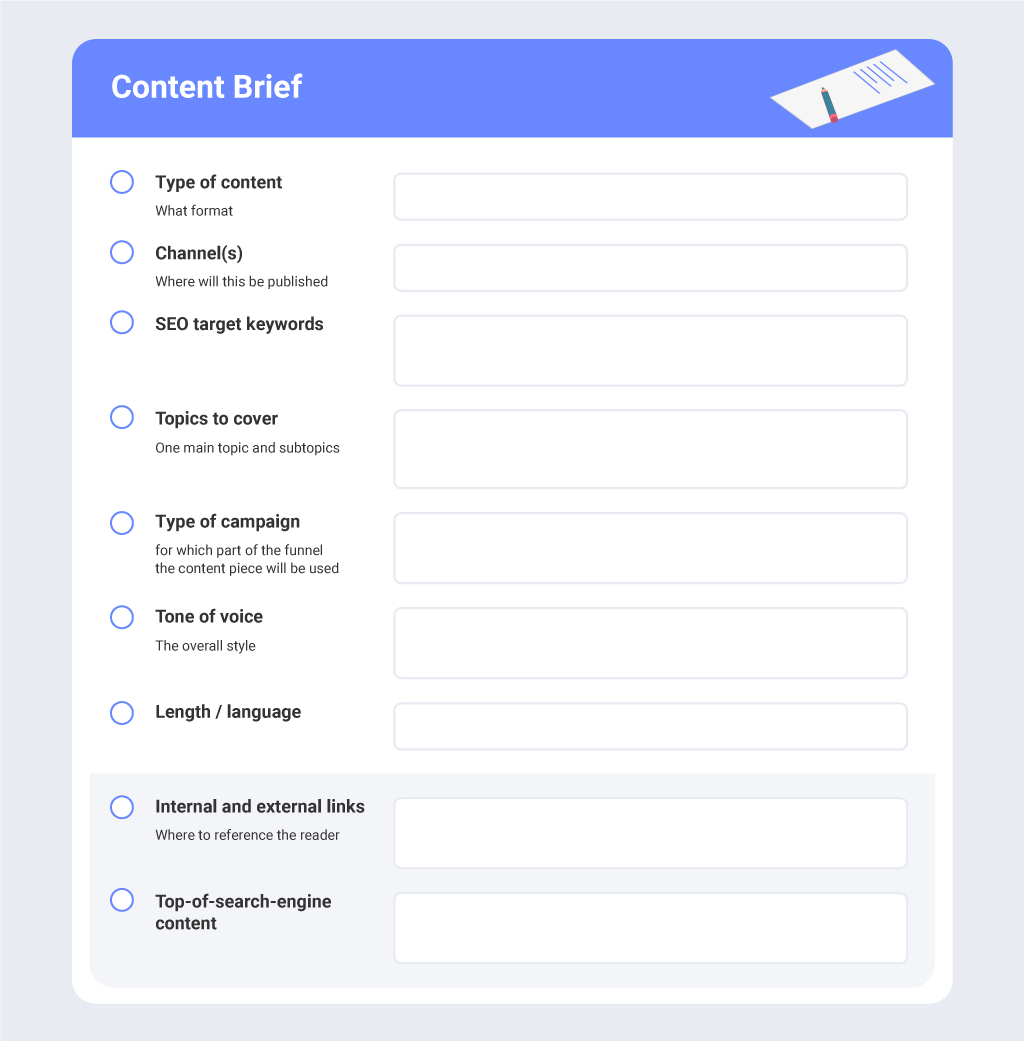
An SEO content brief acts as a roadmap for creating high-quality content. It combines keyword research, competitor insights, and editorial instructions into one organized document. Every writer can follow the same direction, resulting in consistent and search-friendly articles. This process also minimizes confusion and saves valuable editing time.
Why Every Writer Needs a Detailed Brief
A clear brief removes guesswork from the writing process. Writers understand the target audience, the article’s purpose, and the information readers expect to find. Better guidance produces stronger first drafts with fewer revisions. Teams also maintain a consistent writing style across multiple projects.
How Content Briefs Improve Search Rankings
Search engines reward content that answers user questions clearly and completely. A strong content brief ensures important topics, related keywords, and search intent are covered before writing begins. It also encourages logical heading structures and better topical relevance. As a result, articles have a greater chance of performing well in search results.
Why SEO Content Briefs Matter in 2026
Modern SEO focuses on creating helpful, trustworthy, and user-focused content rather than simply adding keywords. Content briefs help writers understand what users actually need while supporting Google’s Helpful Content principles. They also prepare articles for AI-powered search experiences where relevance and context matter more than repetition.
Aligning Content with Search Intent
Every successful article starts by understanding why people perform a search. Some users want information, while others compare products or seek solutions to problems. A detailed brief explains this intent before writing begins. Writers can then create content that directly answers readers’ expectations.
Supporting EEAT and Helpful Content
Experience, Expertise, Authoritativeness, and Trustworthiness remain essential ranking factors. A content brief encourages writers to include credible information, practical examples, and accurate explanations throughout the article. Readers gain confidence when content demonstrates genuine knowledge. Search engines also recognize these quality signals over time.
Optimizing for AI Search and Semantic SEO
AI-powered search engines analyze topics instead of individual keywords alone. Writers should naturally include related concepts, entities, and user questions within the article. A comprehensive brief makes this process much easier. This approach improves visibility across traditional search and AI-generated answers.
Benefits of Using an SEO Content Brief
| Benefit | How It Helps |
|---|---|
| Better Content Quality | Gives writers clear instructions from the beginning |
| Stronger SEO | Covers search intent and semantic keywords naturally |
| Faster Workflow | Reduces editing and rewriting time |
| Consistent Brand Voice | Keeps every article aligned with company standards |
| Improved User Experience | Answers readers’ questions in an organized way |
Essential Elements of a High-Performing SEO Content Brief
An effective content brief contains much more than a target keyword. It provides writers with clear expectations while helping editors maintain quality standards. Every section should contribute toward creating valuable and reader-friendly content that satisfies both users and search engines.
Primary and Supporting Keywords
Every brief should identify one primary keyword supported by closely related phrases. Supporting keywords help search engines understand the overall topic without forcing repetitive wording. Writers should naturally include these terms throughout the content where they fit. This creates better semantic relevance and improves readability.
Target Audience and Search Intent
Understanding the audience shapes every part of the writing process. A beginner needs different explanations than an experienced professional. The brief should describe who the article targets and the problems readers hope to solve. This guidance helps writers produce useful and engaging content.
Content Goals and Call to Action
Every article should have a clear objective before writing starts. Some posts educate readers, while others generate leads or encourage newsletter sign-ups. Including the desired outcome keeps writers focused throughout the article. A strong call to action should feel helpful instead of overly promotional.
Recommended Word Count
Word count should reflect topic depth rather than arbitrary numbers. Competitive topics often require detailed explanations, examples, and practical guidance. The brief should recommend a suitable length based on competitor analysis and user expectations. Writers can then balance depth with readability. If you want to benchmark content depth against top competitors automatically, tools compared in our Surfer SEO vs Clearscope guide can help set realistic word count targets.
Heading Structure (H2 and H3)
A logical heading structure improves both readability and SEO performance. Clear H2 and H3 headings help readers scan the article quickly while organizing information effectively. Search engines also understand the content hierarchy more easily. Well-planned headings create a smoother reading experience.
Internal and External Linking
Internal links guide readers toward related content across your website. External links should point to trustworthy and authoritative sources whenever appropriate. Both link types improve user experience and strengthen topical relevance. The content brief should recommend important pages for linking opportunities.
Competitor Insights
Studying successful competitors reveals what readers already expect from a topic. Writers can identify common sections while discovering opportunities competitors have overlooked. The goal is not to copy existing content but to create something more valuable. This strategy helps build stronger topical authority.
Questions to Answer
People search because they have specific questions needing clear answers. The brief should include common questions gathered from search results, forums, and customer conversations. Addressing these naturally improves content completeness. It also increases opportunities to appear in featured snippets and AI-generated search summaries.
Tone of Voice and Formatting Guidelines
Consistency builds trust across every published article. Writers should know whether the tone should be professional, friendly, educational, or conversational before starting. The brief should also explain formatting preferences such as heading styles, tables, and paragraph length. Clear expectations improve the final quality significantly.
Essential Components of an SEO Content Brief
| Section | Purpose |
|---|---|
| Primary Keyword | Defines the main search topic |
| Supporting Keywords | Expands semantic relevance |
| Search Intent | Explains user expectations |
| Audience | Identifies the ideal reader |
| Article Outline | Organizes content logically |
| Internal Links | Connects related website pages |
| Competitor Insights | Finds content opportunities |
| CTA | Guides readers toward the desired action |
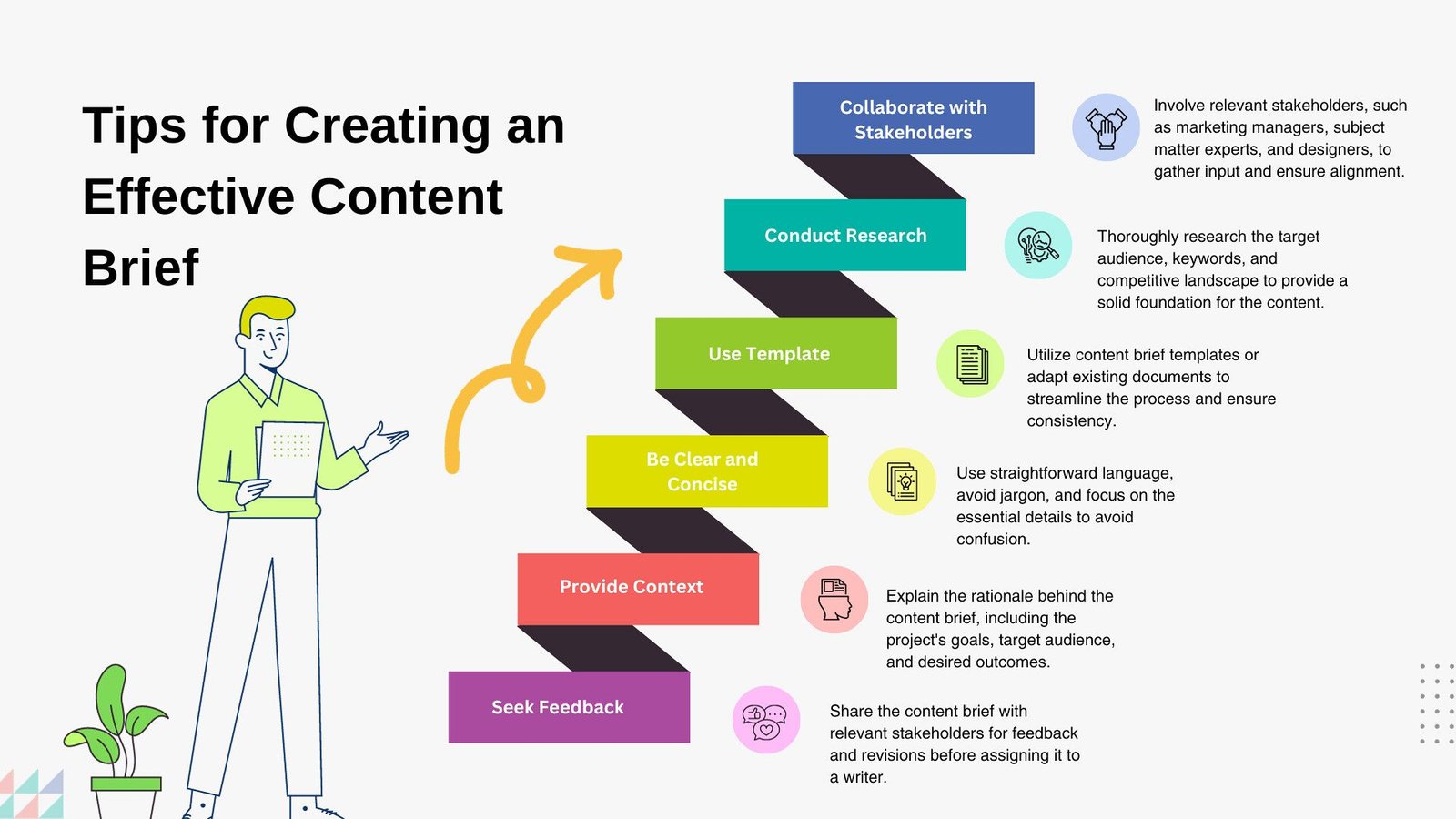
How to Write Content Brief Step by Step
Writing an effective content brief is a simple process when you follow a structured workflow. Each step helps writers create content that satisfies readers while meeting SEO goals. A well-planned brief also reduces editing time and improves collaboration between editors and writers.
Perform Keyword Research
Start by identifying one primary keyword and several supporting keywords that closely relate to the topic. Use keyword research tools to understand search volume, user intent, and common questions. Instead of chasing only high-volume terms, focus on keywords that genuinely match what your audience wants to learn. To speed up this step, pairing manual research with one of the best SEO tools available today can surface search volume and related questions much faster.
Analyze Top-Ranking Pages
Review the highest-ranking articles to understand why they perform well. Pay attention to their headings, content depth, formatting, and user experience. Look for missing information or outdated advice that your article can improve upon instead of simply copying competitors.
Build a Logical Outline
Create an outline using descriptive H2 and H3 headings that answer users’ questions naturally. Organize sections in a logical order so readers can easily follow the topic. A clear outline also helps writers stay focused from introduction to conclusion.
Add SEO Requirements
Include recommendations for internal links, external references, metadata, reading level, and formatting. Mention any important entities, related topics, and semantic keywords that should appear naturally. These instructions help writers produce search-friendly content without keyword stuffing. Many teams now rely on dedicated content optimization software instead of manual checklists — our comparison of Outranking vs PageOptimizer Pro breaks down two popular options for building briefs like this automatically.
Review Before Sending to Writers
Always review the brief before assigning it to a writer. Confirm the search intent, headings, keywords, and content goals are accurate. A few extra minutes of review can prevent hours of editing later.
SEO Content Brief Example
Looking at an example makes the process much easier to understand. A structured brief gives writers everything required to produce helpful, optimized content. It also ensures consistency across different articles and team members.
Sample Brief Layout
| Brief Section | Example |
|---|---|
| Primary Keyword | content brief template seo |
| Search Intent | Informational |
| Audience | SEO professionals, marketers, bloggers |
| Word Count | 1,200 words |
| Tone | Conversational and professional |
| CTA | Download a content brief template |
| Internal Links | SEO guide, keyword research guide |
| External Sources | Google Search Central, industry research |
Example Keyword Strategy
Choose one primary keyword and naturally support it with related phrases such as how to write content brief, seo content brief example, brief for writers, and content brief guide 2026. Spread these terms throughout the article where they make sense. This improves topical relevance while maintaining a smooth reading experience.
Example Content Structure
A complete article should begin with an engaging introduction, explain the topic clearly, provide actionable steps, include practical examples, and end with a strong conclusion. This structure satisfies both readers and search engines. It also encourages visitors to stay on the page longer.
Common Mistakes to Avoid
Even experienced content teams can make mistakes when preparing SEO briefs. Recognizing these problems early helps create stronger content and a smoother workflow. Small improvements often produce significant long-term results.
Too Many Keywords
Repeating the same keyword excessively makes content difficult to read. Search engines now understand context and related terms much better than before. Focus on writing naturally instead of forcing keywords into every paragraph.
Unclear Search Intent
A brief without defined search intent often produces unfocused content. Writers should clearly understand whether readers want information, comparisons, or solutions. Matching user intent improves engagement and search performance.
Missing Audience Details
Writers need to know exactly who they are writing for. Explaining the audience’s knowledge level, challenges, and goals helps create more relevant content. Personalized writing connects better with readers.
Poor Heading Structure
Confusing headings make articles difficult to scan. Use descriptive H2 and H3 headings that clearly explain each section. Well-organized content improves readability and navigation.
Lack of Content Goals
Every article should support a measurable objective. Whether the goal is education, lead generation, or product awareness, writers need this information before they begin. Clear goals create focused and valuable content.
Best Practices for Creating Briefs That Writers Love
Excellent briefs make the writing process faster and more enjoyable. They provide enough detail without overwhelming the writer. The best briefs balance creativity with practical guidance.
Keep Instructions Clear
Avoid vague directions that leave room for confusion. Explain exactly what should be covered, why it matters, and how success will be measured. Simple instructions produce better first drafts.
Balance SEO and Readability
SEO should enhance the content rather than dominate it. Writers should prioritize solving readers’ problems while naturally incorporating optimization techniques. Helpful content consistently performs better over time.
Encourage Original Insights
Ask writers to include examples, experiences, or expert opinions whenever possible. Original information increases credibility and supports Google’s EEAT principles. Unique content also stands out from competitors.
Update Templates Regularly
SEO continues to evolve with changing search algorithms and AI technologies. Review your content brief template regularly to include new best practices and user expectations. Continuous improvement keeps your workflow competitive.
Final Content Brief Checklist
Before approving a content brief, verify that every essential element is included. A complete checklist reduces mistakes and improves publishing efficiency. Consistency leads to better long-term content performance.
| Checklist Item | Status |
|---|---|
| Primary keyword selected | ✓ |
| Supporting keywords included | ✓ |
| Search intent defined | ✓ |
| Target audience identified | ✓ |
| Article outline completed | ✓ |
| Internal linking suggestions | ✓ |
| External references noted | ✓ |
| CTA included | ✓ |
| Formatting instructions added | ✓ |
| EEAT considerations covered | ✓ |
Key Takeaways
- A detailed content brief gives writers clear direction before writing starts.
- Strong briefs combine keyword research, search intent, audience insights, and content structure.
- Semantic SEO and EEAT principles should be part of every modern content brief.
- AI-powered search rewards comprehensive, well-organized, and trustworthy content.
- Updating your content brief template regularly helps maintain consistent content quality.
Conclusion
An effective content brief is more than a planning document .It is the blueprint for creating valuable, reader-focused content that ranks. By combining clear instructions, search intent analysis, semantic keywords, and EEAT best practices, you can help writers produce articles that require fewer revisions and deliver better SEO results. As search continues to evolve with AI-driven experiences, investing time in creating detailed content briefs will remain a smart strategy. Businesses looking to improve their content workflow and long-term organic performance can adopt these proven practices to build a scalable SEO process. For more practical SEO insights and digital marketing resources, Brandsholder is an excellent source for staying informed about modern content strategies.
Frequently Asked Questions
1. What is an SEO content brief?
An SEO content brief is a document that outlines the keywords, search intent, audience, structure, and writing guidelines needed to create optimized content.
2. How do you write an effective content brief?
Start with keyword research, define search intent, analyze competitors, build a clear outline, and include SEO recommendations along with formatting instructions.
3. Why are content briefs important for SEO?
Content briefs improve consistency, reduce editing time, align content with user intent, and help writers produce comprehensive articles that satisfy search engines.
4. Can AI help create SEO content briefs?
Yes. AI can assist with keyword research, topic clustering, competitor analysis, and outline generation. However, human review is still essential to ensure accuracy, originality, and strategic direction.
5. How often should a content brief template be updated?
Review and update your template every few months or whenever major Google Search updates, AI search changes, or your content strategy evolves to keep it effective and relevant.