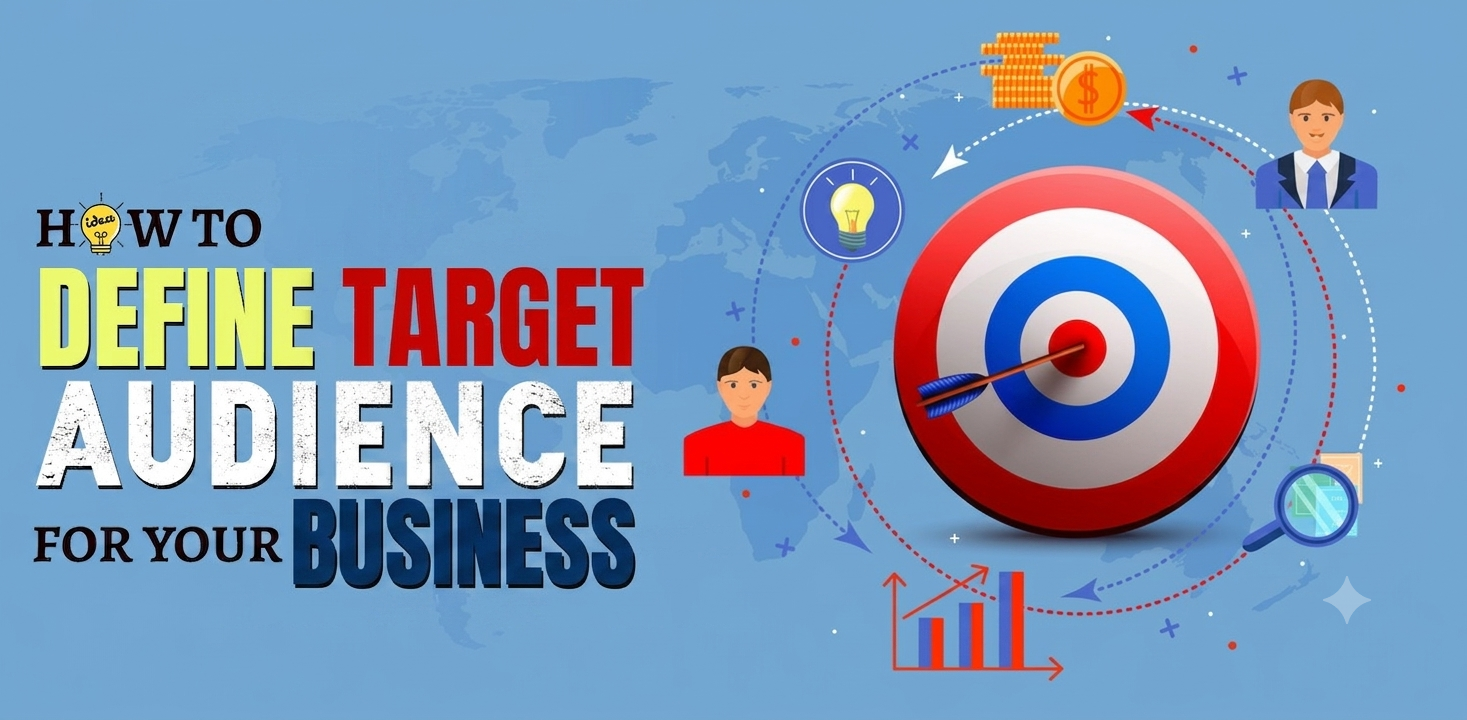
The best marketing does not try to reach everyone.
It reaches the right people with the right message at the right moment.
That sounds obvious, yet many businesses still define their audience with statements such as “men aged 25-45,” “women interested in beauty,” or “small business owners.” These descriptions may be useful starting points, but they do not tell you what actually drives a customer to buy.
What problem keeps them awake?
What outcome do they want?
What makes them trust one brand instead of another?
What stops them from purchasing?
That is why a precise target audience strategy is so powerful in modern marketing.
A precise audience definition gives you a foundation for your content, branding, advertising, offers, website messaging, and customer experience. Instead of guessing what your audience wants, you build your strategy around real evidence.
This audience definition guide takes you beyond basic demographics and shows you how to understand the people most likely to become valuable customers.
AI Overview
To define target audience marketing effectively, go beyond age, gender, income, and location. Use target audience research to uncover your customers’ problems, goals, motivations, behaviors, and buying triggers. Then apply buyer persona creation to turn those insights into clear customer profiles. A practical audience definition guide helps identify the right segments, while customer profiling marketing reveals which customers are most valuable. The result is more focused messaging, better content, stronger offers, and marketing that reaches the people most likely to buy.
Key Takeaways
- Define target audience marketing by understanding people, not just demographic statistics.
- Use target audience research to discover real customer needs, problems, and motivations.
- Go beyond age and location by analyzing psychographics and behavior.
- Use buyer persona creation to turn research into actionable customer profiles.
- Follow an audience definition guide that covers goals, pain points, triggers, objections, and channels.
- Use customer profiling marketing to understand customer behavior and identify valuable segments.
- Keep refining your audience as customer expectations, markets, and buying behavior change.
What Does It Mean to Define Your Target Audience?
Defining your target audience in marketing means identifying the specific group of people who are most likely to need, value, and purchase your product or service.
A useful audience profile should answer:
- Who are they?
- What problem are they trying to solve?
- What outcome do they want?
- What motivates them?
- What concerns them?
- What influences their buying decision?
- Where do they search for information?
- Why would they choose your brand?
Consider the difference.
Basic audience:
Small business owners aged 25–50.
Precise audience:
Service-based small business owners who struggle to convert website visitors into qualified leads and want predictable growth without wasting their marketing budget.
The second version is far more actionable.
It gives you information that can influence your headlines, offers, content topics, advertising angles, and sales messaging. Once your audience is clearly defined, that same research becomes the foundation for a strong brand positioning strategy that speaks directly to them.
Google recommends creating content that is useful to a clearly defined audience rather than producing pages primarily to attract search-engine traffic. This guidance comes directly from Google’s Search Central documentation on creating helpful, people-first content.
Target Audience Research: Discover What Your Customers Really Want
Target audience research is the foundation of accurate audience definition.
Instead of assuming what your customers want, you investigate what they actually do, need, fear, value, and purchase.
Start with your existing customers.
Look at:
- Purchase history
- Website analytics
- Customer reviews
- Sales conversations
- Customer support questions
- Social media engagement
- Email behavior
- Repeat purchases
- Testimonials
- Lead quality
Then ask powerful questions:
Why did this customer buy?
What problem were they trying to solve?
What alternatives did they consider?
What almost stopped them from buying?
What result did they expect?
The goal is to find patterns.
If 30 customers independently describe the same problem, that is much stronger evidence than your personal assumption about what customers want.
Use Four Research Sources
- Customer interviews
Talk directly to customers and ask open ended questions about their challenges, goals, and buying journey.
- Surveys
Use surveys to identify recurring needs, frustrations, preferences, and objections.
- Reviews
Study your own reviews and competitor reviews. Customers often explain their problems in surprisingly specific language.
- Search and social behavior
Look at the questions people ask, content they consume, products they compare, and discussions they join.
The strongest buyer personas are built from real customer research, including interviews, surveys, and data analysis.
The Golden Rule of Audience Research
Do not research what customers say they want only. Research what they actually do.
A customer might say price is the most important factor, but their behavior may show that they repeatedly compare premium options, read reviews, and look for guarantees.
That behavior tells a deeper story.
Buyer Persona Creation: Turn Research Into a Powerful Customer Profile
Buyer persona creation transforms customer research into a profile your marketing team can actually use.
A buyer persona is a research-based representation of a particular customer segment. Strong personas can include demographics, behaviors, motivations, goals, challenges, and purchasing influences.
Instead of creating a fictional character based on imagination, build your persona from recurring patterns in your research.
Example Buyer Persona
Name: Growth Focused Sarah
Role: Small business owner
Primary goal: Generate more qualified leads
Main problem: Website traffic is not converting
Biggest frustration: Wasted marketing budget
Motivation: Predictable business growth
Buying trigger: Proven results
Main objection: Fear of wasting money
Preferred content: Case studies, guides, tutorials
Decision factor: Trust + measurable ROI
Compare that with:
Women aged 25-40.
The first profile tells your marketing team what Sarah cares about, what content she needs, what objections must be addressed, and what evidence can influence her decision.
That is the real power of buyer persona creation.
What Your Persona Should Include
A useful persona can cover:
- Demographics
- Job or business role
- Goals
- Pain points
- Motivations
- Buying triggers
- Objections
- Preferred content
- Preferred channels
- Decision-making factors
- Common questions
Keep your personas focused. You do not need ten different personas if three meaningful customer segments explain most of your valuable business.
Audience Definition Guide: Build a Precise Audience Step by Step
This audience definition guide gives you a simple framework for turning research into a clear target audience.
1. Define Who They Are
Start with relevant demographics:
- Age
- Location
- Occupation
- Income
- Education
- Business size
But do not stop here.
2. Define What They Want
Identify their desired outcome.
Do they want:
- More revenue?
- More leads?
- Convenience?
- Better quality?
- Greater confidence?
- Lower costs?
- Faster results?
3. Identify Their Pain Points
Find the problems creating urgency.
For example:
“I am getting traffic, but nobody is converting.”
That is much more useful than simply knowing the customer’s age.
4. Understand Their Motivation
Ask why solving the problem matters.
A business owner may want more leads because they need predictable revenue.
A professional may want better personal branding because they want career opportunities.
The deeper motivation often creates the strongest marketing message.
5. Identify Buying Triggers
Determine what makes people finally take action.
Common triggers include:
- Urgency
- A new problem
- A deadline
- Social proof
- Recommendations
- Case studies
- A clear ROI
- A limited opportunity
6. Identify Objections
Understand what creates hesitation:
- Price
- Trust
- Risk
- Complexity
- Lack of information
- Previous bad experiences
Your marketing should answer these objections before the customer reaches the final decision.
7. Identify Preferred Channels
Find where your audience actually spends attention.
| Channel | Typical Audience Intent |
| Google Search | Actively looking for a solution |
| Professional and B2B research | |
| Visual discovery and lifestyle content | |
| YouTube | Education, demonstrations, reviews |
| Nurturing and retention | |
| Online Communities | Peer advice and niche discussions |
The objective is not to be everywhere.
It is to be visible where your ideal customer already pays attention. If paid channels are part of the plan, it’s worth reviewing how to set up Google Ads conversion tracking correctly so this audience data actually improves ad performance.
Customer Profiling Marketing: Understand Your Most Valuable Customers
Customer profiling marketing helps businesses organize customer information into useful profiles and segments.
Instead of looking at every customer as identical, you identify meaningful differences in:
- Needs
- Preferences
- Purchase frequency
- Spending behavior
- Interests
- Problems
- Engagement
- Customer value
For example, imagine an online clothing store has 10,000 customers.
Not all 10,000 customers have the same value.
One group buys once a year.
Another group purchases every month.
A third group buys premium products and recommends the brand to others.
Customer profiling marketing helps identify these differences so the business can create more relevant campaigns.
Segment Customers by Value
You can create groups such as:
High-value customers: Frequent purchases + high average order value.
Growth customers: New customers showing strong repeat-purchase potential.
Occasional customers: Low purchase frequency but relevant interest.
Poor-fit customers: Low value or customers whose needs do not match your offer.
This makes marketing more strategic because you can create different messages for different customer groups.
Go Beyond Demographics: Use Psychographics and Behavior
Demographics tell you who the customer is.
Psychographics help explain what the customer values.
Study:
- Lifestyle
- Interests
- Beliefs
- Values
- Aspirations
- Fears
- Priorities
- Attitudes toward price
- Attitudes toward risk
Then compare these insights with behavior.
For example, two customers may both earn $5,000 per month.
One is extremely price conscious.
The other is willing to pay more for convenience and premium service.
Demographically, they look similar.
Psychographically and behaviorally, they are completely different.
That difference can determine your messaging, pricing strategy, content, and offers.
Create a Negative Audience Too
Defining your target audience is not only about identifying who you want.
You should also identify who you do not want.
A negative audience may include people who:
- Cannot afford your offer
- Are outside your service area
- Need a product you do not provide
- Are unlikely to become profitable customers
- Have expectations your solution cannot meet
- Require services outside your expertise
This can improve marketing efficiency because you stop wasting resources trying to convince poor-fit prospects.
Test Your Audience Instead of Assuming It Is Correct
Even excellent research can contain assumptions.
That is why audience definition should be tested.
Track:
- Conversion rates
- Lead quality
- Cost per lead
- Customer acquisition cost
- Engagement
- Repeat purchases
- Customer lifetime value
- Content performance
Then ask:
Are we attracting the right people?
If traffic increases but qualified leads decrease, your audience may be too broad.
If people engage but do not purchase, your offer or message may not match their intent.
If qualified leads and conversions increase, your audience definition is moving in the right direction.
Do not treat your persona as a permanent document. Customer needs and market conditions evolve, so your research should evolve with them.
The Simple Formula to Define Your Target Audience
Use this formula to create a precise audience statement:
We help [specific audience] who struggle with [specific problem] and want [desired outcome]. They value [key priorities], are motivated by [buying triggers], and hesitate because of [main objections].
Example
We help growing service businesses that struggle to convert website visitors into qualified leads. They want predictable growth, value measurable results, respond to proven strategies, and hesitate when ROI is unclear.
That one statement can guide your:
- Content strategy
- Brand messaging
- Website copy
- Advertising
- Email marketing
- Social media
- Sales conversations
- Product offers
Target Audience Definition Framework
| Audience Layer | What You Need to Discover | Example |
| Demographics | Who are they? | Age, job, income, location |
| Psychographics | What do they value? | Lifestyle, beliefs, interests, priorities |
| Pain Points | What problem are they struggling with? | Low sales, poor conversions, wasted budget |
| Goals | What result do they want? | More leads, higher revenue, faster growth |
| Motivations | Why do they want that result? | Financial security, growth, convenience |
| Buying Triggers | What makes them take action? | Urgency, reviews, case studies, discounts |
| Objections | What prevents them from buying? | Price, trust, risk, lack of information |
| Buying Behavior | How do they make decisions? | Search, compare, review, recommendation |
| Preferred Channels | Where do they spend their attention? | Google, LinkedIn, Instagram, YouTube, email |
| Customer Value | Which customers are most valuable? | Repeat buyers, high spenders, loyal customers |
Conclusion
You do not need the biggest audience to build a successful brand.
You need the right audience.
To define target audience marketing with precision, stop relying on demographics alone. Start with target audience research to discover what customers actually need. Use buyer persona creation to turn those insights into practical profiles. Follow an actionable audience definition guide to map goals, pain points, motivations, triggers, objections, and channels. Then use customer profiling marketing to understand customer value and create more relevant segments.
The real competitive advantage comes from knowing your audience so well that your marketing feels like it was written specifically for them.
When you understand the person behind the data, you stop guessing, and start connecting.
For more branding and marketing work, you can also access your Brandsholder content editor.
Frequently Asked Questions
What does define target audience marketing mean?
Define target audience marketing means identifying the people most likely to need, value, and purchase your product or service, then understanding their needs, motivations, behaviors, goals, and buying decisions.
Why is target audience research important?
Target audience research helps replace assumptions with real customer insights. It reveals what customers need, what problems they experience, what motivates them, and what influences their purchasing decisions.
What is buyer persona creation?
Buyer persona creation is the process of turning customer research into detailed profiles representing important customer segments. A strong persona includes goals, challenges, motivations, behaviors, and buying factors not just demographics.
What is an audience definition guide?
An audience definition guide is a framework for identifying and describing an ideal customer using demographics, psychographics, behavior, goals, pain points, buying triggers, objections, and preferred channels.
What is customer profiling marketing?
Customer profiling marketing is the process of organizing and analyzing customer information to understand who customers are, what they need, how they behave, and what influences their purchasing decisions.
How often should you update your target audience?
Review your audience whenever your market, product, positioning, customer behavior, or business goals change. Regular performance data can also reveal when your current audience definition is no longer accurate.