Google Ads Quality Score is one of the most important indicators of campaign quality. Improving relevance, expected click-through rate, and landing page experience helps advertisers achieve better visibility while lowering advertising costs. Instead of relying only on higher bids, focus on delivering a better experience for users through organized keyword groups, compelling ad copy, optimized landing pages, and continuous testing. Consistent optimization leads to stronger campaign performance, improved ROI, and sustainable long-term growth.
Getting consistent results from Google Ads is not only about increasing your budget. Many advertisers spend more than necessary because they overlook one important metric, Quality Score. A higher score helps your ads compete more effectively, improves visibility, and often reduces advertising costs without sacrificing performance. Understanding how this metric works gives you a practical advantage over competitors.
Whether you manage a small business campaign or a large PPC account, improving your campaigns starts with understanding what influences ad performance. If you’re deciding where to invest your marketing budget, comparing SEO vs PPC can help clarify which channel fits your goals best. This guide explains the most effective strategies to optimize your campaigns, improve ad relevance, and create a better experience for potential customers.
How Google Defines Quality Score
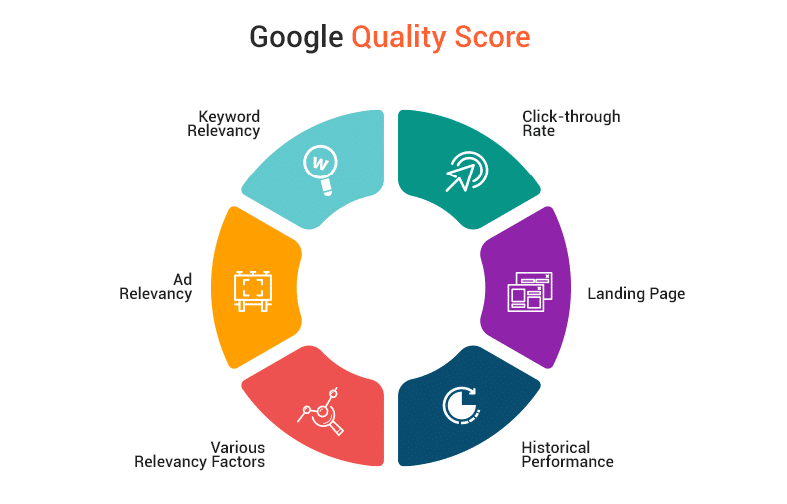
Google evaluates your campaigns using historical performance data and predicted user behavior. The system compares your keywords, ad copy, and landing page to determine whether they provide a relevant experience for searchers. Each component contributes to your overall performance. According to Google’s own official documentation, Quality Score is a diagnostic tool designed to help advertisers understand relative ad relevance rather than being used directly in the auction.

Rather than focusing on a single metric, Google combines multiple signals to estimate future performance. These predictions help advertisers identify weaknesses before they negatively impact campaign results.
Where to Find Quality Score in Google Ads
You can find this metric inside the Keywords section of your Google Ads account. Add the Quality Score columns if they are not already visible in your dashboard. Reviewing these values regularly helps you identify keywords that need improvement.
The dashboard also displays detailed ratings for expected click-through rate, landing page experience, and ad relevance. Monitoring these indicators makes campaign optimization much easier.
| Quality Score | Performance Level | Recommended Action |
|---|---|---|
| 1–3 | Poor | Rebuild ads and landing pages |
| 4–6 | Average | Improve relevance and CTR |
| 7–8 | Good | Continue testing and optimizing |
| 9–10 | Excellent | Maintain performance and scale campaigns |
Why Google Ads Quality Score Matters
A strong google ads quality score improves more than just your campaign reports. It directly influences ad visibility, advertising costs, and the overall efficiency of your marketing budget. Even small improvements can create noticeable savings over time.
Businesses that consistently optimize campaign quality usually achieve stronger returns on advertising investment. Instead of relying only on higher bids, they improve relevance, which Google rewards through better ad positions and reduced CPC.
Impact on Cost Per Click (CPC)
One of the biggest benefits of a higher score is paying less for each visitor. When Google believes your ads provide value, you often need lower bids to compete against advertisers targeting similar keywords. This creates more room within your budget.
Lower CPC allows businesses to attract more qualified traffic without increasing monthly advertising expenses. Those savings can then be invested into testing new keywords or expanding successful campaigns. Automated bidding systems like Smart Bidding and Performance Max are also reshaping how advertisers manage CPC efficiently. Understanding how higher-quality campaigns often achieve a lower CPC on Google Ads
Impact on Ad Rank
Ad Rank determines where your advertisement appears on the search results page. While bidding remains important, ad quality also plays a significant role in winning higher positions. Better-performing ads can sometimes outrank competitors with larger budgets.
This balance encourages advertisers to improve campaign quality instead of simply spending more money. Relevant ads create a better experience for users while delivering stronger business results.
Impact on Impression Share
Impression Share measures how often your ads appear compared to the total number of available opportunities. Low-quality campaigns frequently miss valuable impressions because Google favors advertisements offering greater relevance.
Improving campaign quality increases your chances of appearing in competitive auctions. More visibility often leads to additional clicks, leads, and conversions.
The Three Core Quality Score Factors
Google evaluates campaign performance using three primary components. Each factor measures a different aspect of user experience and helps determine how useful your advertisements are. Improving these elements together produces the strongest results.
Ignoring even one factor can limit campaign performance. A well-written ad cannot fully compensate for a slow landing page or poorly targeted keywords.
Expected Click-Through Rate (CTR)
Expected CTR predicts how likely users are to click your advertisement when it appears in search results. Historical account performance, keyword relevance, and compelling headlines all influence this prediction. Stronger click-through rates indicate that your ads attract attention.
Improve expected CTR by writing clear headlines, highlighting benefits, and matching user search intent. Testing multiple ad variations also helps identify the highest-performing combinations.
Ad Relevance Score
Ad relevance measures how closely your advertisement matches the keyword being searched. When users immediately recognize that your ad answers their question, engagement usually improves. Better alignment also supports stronger campaign performance.
Instead of placing unrelated keywords into one ad group, organize campaigns into tightly themed groups. This allows you to write personalized advertisements for every keyword category.
Landing Page Experience
Landing page experience evaluates what users see after clicking your advertisement. Google prefers pages that load quickly, provide useful information, and match the advertisement’s promise. Visitors should immediately find the content they expected.
A mobile-friendly design, fast loading speed, simple navigation, and clear calls to action all contribute to a better user experience. These improvements not only support campaign performance but also increase conversion rates.
| Quality Factor | Why It Matters | Optimization Tip |
| Expected CTR | Predicts engagement | Test compelling headlines |
| Ad Relevance | Matches user intent | Group similar keywords together |
| Landing Page Experience | Improves user satisfaction | Increase page speed and content relevance |
How to Improve Google Ads Quality Score
Improving campaign quality requires consistent optimization rather than one-time adjustments. Small improvements across keywords, advertisements, and landing pages often produce significant long-term gains. Following a structured process helps advertisers achieve better performance without increasing advertising costs.
Instead of chasing shortcuts, focus on creating campaigns that genuinely solve users’ problems. Google’s system consistently rewards advertisers who prioritize relevance and user experience.
Organize Keywords into Tight Ad Groups
Create smaller ad groups containing closely related keywords instead of broad collections. This makes advertisements more relevant and increases the likelihood of matching user intent. Organized campaign structures are easier to manage and optimize.
For example, instead of grouping “running shoes,” “basketball shoes,” and “hiking boots” together, create separate ad groups for each product category. This approach improves relevance and supports stronger campaign performance.
Write Highly Relevant Ad Copy
Every advertisement should closely match the keyword and the user’s search intent. Generic ads often receive fewer clicks because they fail to answer what people are actually looking for. Specific headlines and descriptions make your message more convincing.
Include the main benefit in the headline, highlight a unique selling point, and finish with a clear call to action. This simple approach increases engagement while improving overall campaign performance.
Improve Landing Page Relevance
Your landing page should continue the same message users see in the advertisement. If the ad promises a free consultation, discount, or product feature, the landing page should immediately deliver that information. Consistency builds trust and reduces bounce rates.
Make pages mobile-friendly, fast-loading, and easy to navigate. Clear headings, helpful content, and visible call-to-action buttons encourage visitors to stay longer and convert. If your site currently loads slowly on mobile, learning how to make your website mobile-friendly can directly improve both Quality Score and conversions.
Increase Expected Click-Through Rate
A higher click-through rate signals that users find your ads useful. Improving CTR starts with writing attention-grabbing headlines that directly answer search queries. Small improvements can significantly influence campaign efficiency over time.
Experiment with different headlines, descriptions, and calls to action through A/B testing. Reviewing search term reports also helps identify opportunities to refine messaging.
Add Negative Keywords
Negative keywords prevent your ads from appearing for irrelevant searches. This reduces wasted spending and improves campaign relevance by attracting more qualified visitors. Better traffic often results in stronger engagement metrics.
Review your search terms report every week and exclude phrases unrelated to your products or services. This simple habit improves campaign efficiency and reduces unnecessary clicks.
Optimize Responsive Search Ads
Responsive Search Ads allow Google to test different combinations of headlines and descriptions automatically. Providing multiple high-quality assets gives the system more opportunities to match user intent.
Create varied headlines focusing on benefits, features, pricing, and customer pain points. Strong combinations improve engagement while supporting better overall ad performance.
Improve Mobile Experience
Most searches now happen on mobile devices, making mobile optimization essential. Slow pages, difficult navigation, or poor formatting can discourage users before they even explore your offer.
Compress images, simplify layouts, and ensure forms are easy to complete on smaller screens. A smooth mobile experience benefits both users and campaign results.
How to Achieve a Quality Score 10
Reaching a perfect score is possible, but it requires continuous optimization instead of one-time changes. Advertisers who consistently test, measure, and improve their campaigns are more likely to reach this level. Every campaign should focus on relevance, user experience, and helpful content.
Rather than chasing a perfect number for every keyword, prioritize those driving the highest business value. A balanced optimization strategy produces stronger long-term results.
Characteristics of High-Scoring Campaigns
Top-performing campaigns usually share several common characteristics:
- Highly targeted keyword groups
- Relevant advertisements matching search intent
- Fast, mobile-friendly landing pages
- Strong historical click-through rates
- Continuous testing and optimization
These practices create a positive experience for users while helping campaigns perform efficiently.
Common Optimization Workflow
Successful advertisers regularly audit keywords, review search terms, update advertisements, and improve landing pages. Optimization is an ongoing process rather than a single project.
Following a weekly review schedule makes it easier to detect performance issues before they become expensive.
| Quality Score | Typical Performance | Optimization Priority |
|---|---|---|
| 5 | Average visibility | Improve CTR and relevance |
| 7 | Competitive | Enhance landing page experience |
| 10 | Excellent | Scale campaigns while monitoring performance |
How Higher Quality Score Helps Lower CPC
Many advertisers assume increasing bids is the only way to improve campaign performance. In reality, higher-quality campaigns often earn better positions while paying less per click. This creates a significant competitive advantage.
Improving lower cpc google ads performance starts with better relevance instead of larger budgets. Google rewards advertisers who provide valuable experiences to users.
Understanding Ad Rank
Ad Rank combines your bid with quality signals to determine ad placement. Higher-quality advertisements often outperform competitors offering larger bids but weaker user experiences.
This system encourages advertisers to focus on relevance instead of simply increasing spending.
Practical Cost Reduction Example
Imagine two advertisers competing for the same keyword. One has an average campaign while the other has excellent relevance and user experience.
| Metric | Campaign A | Campaign B |
| Quality Score | 5 | 10 |
| Average CPC | $2.40 | $1.25 |
| Click-Through Rate | 3.2% | 7.1% |
| Conversion Rate | 4% | 8% |
Although results vary by industry, higher-quality campaigns frequently generate lower acquisition costs and better return on investment.
Common Google Ads Quality Score Mistakes
Many advertisers unknowingly reduce campaign performance through avoidable mistakes. Small issues often accumulate and lead to higher costs over time. Regular account reviews help prevent these problems.
Avoid focusing only on bids while ignoring campaign quality. Balanced optimization delivers more sustainable growth.
Broad Keyword Targeting
Using unrelated keywords within one ad group lowers relevance. Create tightly themed groups so advertisements closely match search intent.
Weak Landing Pages
Slow websites, confusing layouts, and irrelevant content discourage visitors. Improving page speed and content quality creates a better user experience. A slow-loading site is one of the most common culprits understanding why your website is slow can help you fix this before it hurts Quality Score.
Generic Ad Copy
Ads that sound identical to competitors rarely attract attention. Highlight unique benefits that clearly explain why users should choose your business.
Ignoring Search Intent
Understanding why people search is just as important as choosing keywords. Ads and landing pages should answer the user’s question immediately.
Google Ads Quality Score Optimization Checklist
Use this checklist during your weekly account review:
- Review keyword performance.
- Improve ad relevance.
- Test new ad headlines.
- Update landing page content.
- Monitor page speed.
- Add negative keywords.
- Review search term reports.
- Optimize mobile usability.
- Check conversion tracking.
- Continue A/B testing regularly.
Key Takeaways
- Quality Score measures keyword, ad, and landing page relevance.
- Higher scores often reduce CPC and improve Ad Rank.
- Expected CTR, ad relevance, and landing page experience are the three core factors.
- Small, continuous improvements outperform one-time campaign changes.
- Regular testing and optimization produce long-term advertising success.
Conclusion
Improving your google ads quality score is not about finding shortcuts or increasing your budget overnight. It is about building campaigns that genuinely match user intent, deliver relevant advertisements, and provide valuable landing page experiences. When you consistently optimize these areas, better ad positions, lower CPC, and higher conversions naturally follow. If you’re looking for more practical digital marketing insights and actionable optimization strategies, brandsholder is a valuable resource for staying updated with modern PPC and SEO best practices.
Frequently Asked Questions
1. What is a good Google Ads Quality Score?
A score between 7 and 10 is generally considered good. Higher scores usually indicate that your keywords, ads, and landing pages are highly relevant.
2. Can a higher Quality Score reduce CPC?
Yes. Higher-quality campaigns often pay less per click because Google rewards relevant ads with better auction performance.
3. How long does it take to improve Quality Score?
Some improvements appear within days, while others may take several weeks depending on campaign history, traffic volume, and optimization efforts.
4. Is achieving a Quality Score of 10 necessary?
No. Focus on improving high-value keywords first. A score of 7 or above is often enough to achieve excellent campaign performance.
5. Does landing page speed affect Quality Score?
Yes. Fast-loading, mobile-friendly, and relevant landing pages improve user experience, which supports better campaign performance and stronger Quality Score.